Welcome to our Charleston Real Estate Blog!

We will use this space to show our newest listings of available properties for sale in Charleston, Summerville, Mount Pleasant, and the islands. If you see something you like, call or contact us quickly to get your dream home in Charleston SC!

July 7, 2026

Charleston Boating 101: A Guide to Local Marinas, Boat Ramps, and Waterways

The Charleston region was made for boating. Tidal creeks weave through endless marshes, three rivers feed the harbor, and the Atlantic is a short ride from most marinas. Whether you fish, paddle, sail, or cruise, the Lowcountry rewards life on the water. For locals and newcomers alike, this guide breaks down the essentials of Charleston-area boating, from the best marinas to public ramps and protected waterways. If you are exploring Charleston waterfront homes because of the boating lifestyle, this is a great place to start.

Why Charleston Is a Premier Boating Destination

The combination of geography, climate, and water access is hard to match. Charleston Harbor connects the Ashley, Cooper, and Wando Rivers to the Atlantic. The Intracoastal Waterway runs north and south, providing a protected highway from Florida to New England. Tidal creeks and marshes give shallow-draft boaters endless backwater to explore. And the warm, mild climate keeps the season long for much of the year. For boaters of all types, the region delivers an embarrassment of riches.

The Major Charleston-Area Waterways

Charleston Harbor

Charleston Harbor is the heart of the region's boating culture. It connects the major rivers, leads out to the Atlantic, and offers waterfront views of the historic peninsula. The harbor is also where many of the area's marinas and yacht clubs cluster, including the Charleston Maritime Center and Charleston Harbor Resort and Marina on the Mount Pleasant side.

The Ashley River

The Ashley River runs along the west side of the peninsula and is bordered by historic homes, marsh views, and major waterfront properties in West Ashley. Boaters appreciate the river's accessibility and connection to the harbor.

The Cooper River

The Cooper River is broader and deeper than the Ashley, with strong commercial and recreational use. It is the main route to upstream boating and reaches inland toward Berkeley County.

The Wando River

The Wando runs along the back side of Mount Pleasant and Daniel Island, offering quieter, more residential boating with great fishing and easy connection to the harbor.

The Intracoastal Waterway

The ICW is the major north-south route through the region, connecting Isle of Palms, Folly Beach, and points beyond. It is the backbone of long-distance coastal cruising in the Lowcountry.

Tidal Creeks and Marshes

The endless network of tidal creeks behind the barrier islands is one of the most beloved parts of Charleston boating. Shem Creek, Folly Creek, Stono River, Wando back creeks, and dozens of others reward shallow-draft boats and adventurous explorers.
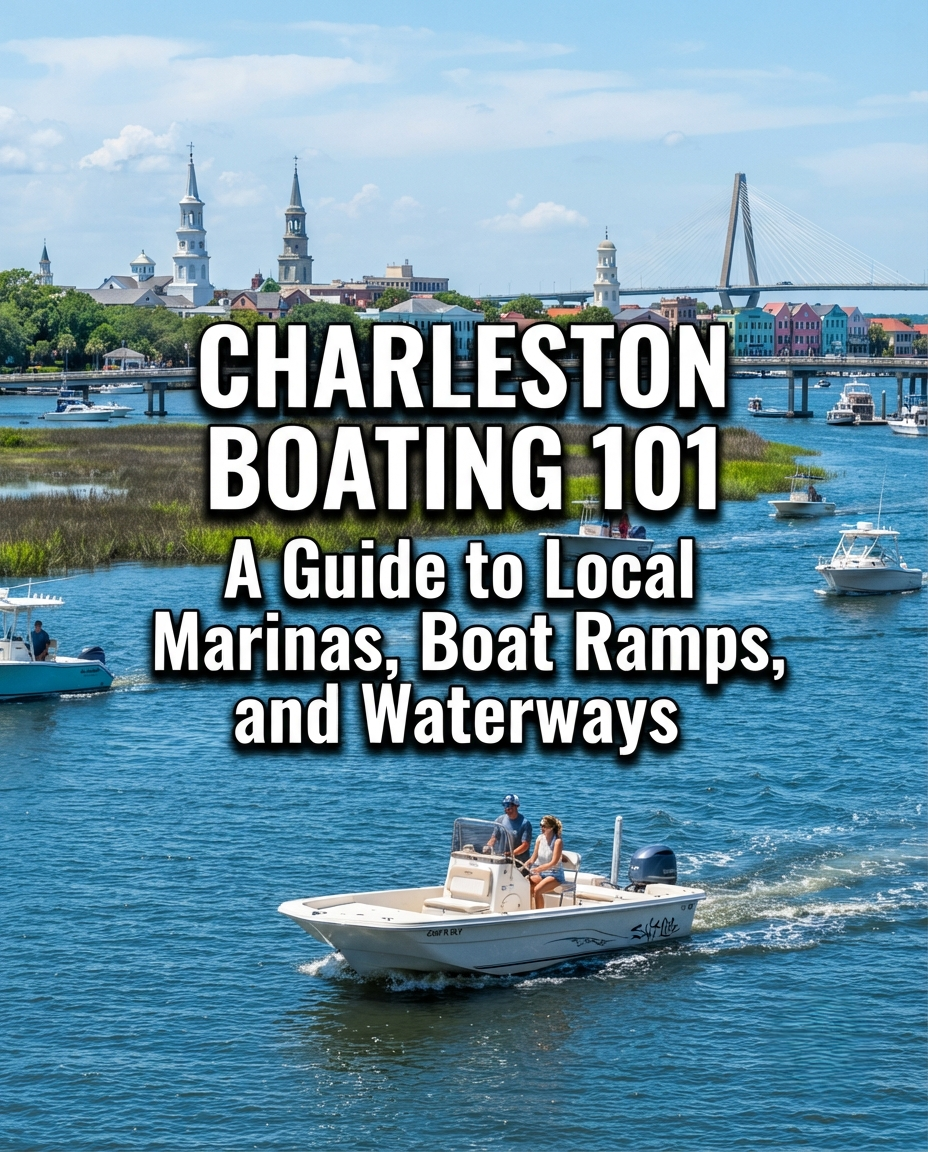
Charleston Boating 101 A Guide to Local Marinas, Boat Ramps, and Waterways

Top Marinas in the Charleston Region

Charleston Harbor Resort and Marina

One of the most prominent marinas in the region, located across the harbor from downtown. Easy access to the harbor and the Atlantic, plus full-service amenities and beautiful sunset views of the peninsula.

Charleston Maritime Center

Located at the foot of downtown Charleston, the Maritime Center is the city's largest public marina and a key hub for both transient and local boaters. Walkable to downtown dining and historic sites.

Charleston City Marina

The Megadock at the Charleston City Marina has long been a favorite for both local boaters and traveling vessels. Located on the Ashley River with easy harbor access.

Shem Creek

Multiple marinas line Shem Creek in Mount Pleasant, including private and public docks. The area is famous for its waterfront restaurants and dolphin sightings.

Daniel Island Marinas

Several marinas serve the Daniel Island community, including the Daniel Island Marina with full-service amenities and easy access to the Wando River.

Wild Dunes Yacht Harbor

For residents of Wild Dunes Resort, the on-island marina offers a convenient base for harbor and ICW boating.

Bohicket Marina

Located near Kiawah and Seabrook Islands, Bohicket Marina is the gateway for boaters in the southern part of the region. Full-service amenities and a vibrant local dining scene.

Public Boat Ramps Worth Knowing

James Island County Park Ramp

One of the most popular public ramps in the region, with multiple lanes, ample parking, and easy access to the Stono River and the Intracoastal Waterway. Great for both fishing boats and recreational watercraft.

Remley's Point

Located in Mt Pleasant on the Wando River, this ramp offers excellent access to the Wando and beyond.

Folly Beach Boat Landing

Conveniently located on Folly Creek, perfect for paddlers, fishermen, and small-boat enthusiasts.

Wappoo Cut Landing

One of the most central ramps in the metro, providing access to the Stono River system and easy connection to the harbor.

Wando Landing in Park West Area

Convenient for residents in northern Mount Pleasant, particularly those in Park West and surrounding communities.

Best Spots to Boat Toward

Capers Island

An undeveloped barrier island accessible by boat, popular for day trips, fishing, and quiet beach exploration.

Morris Island

Off the southern tip of Folly Beach, Morris Island and its lighthouse make for a beautiful destination.

Bull's Bay

North of Mount Pleasant near Awendaw, Bull's Bay offers some of the most unspoiled boating waters in the region.

Sullivan's Island Back Creeks

The protected waters behind Sullivan's Island provide some of the best paddling and shallow-draft boating in the area.

Practical Boating Considerations in the Lowcountry

Tide Awareness

Tides in the Charleston area swing 5 to 7 feet between high and low. Always check the tide before planning your trip. Many shallow creeks are only navigable at certain stages of the tide, and grounding on a sandbar at low tide is a real risk for the unprepared.

Boat Storage

Slips fill up quickly at the major marinas, especially during prime boating seasons. Many owners use dry stack storage, in-water slips, or trailer their boats from home. Communities with private docks command a meaningful premium because they bypass the marina waitlist altogether.

Permits and Registration

All boats with motors must be registered with the South Carolina Department of Natural Resources. Fishing licenses are also required for adults. Take a moment to understand any local rules around personal watercraft and idle zones.

Weather Awareness

Summer afternoon thunderstorms develop quickly. Always check the forecast and have a safe-harbor plan. Hurricane season requires careful planning for boat storage, especially for boats in the water.

How Boating Affects Where to Live

For active boaters, the right neighborhood can transform daily life. Living near a marina, a public boat ramp, or in a community with a private dock dramatically shortens the time from house to water. Mount Pleasant, Daniel Island, James Island, West Ashley along the Ashley River, and the barrier islands all support active boating lifestyles in different ways. Buyers should consider not just dock or ramp access, but also storage, neighborhood culture, and traffic patterns.

Strategy for Boating Buyers

If boating is central to why you are moving to Charleston, work with a Realtor who understands waterfront and boat-access properties intimately. Tour the waterways before settling on a neighborhood. Walk the local marinas, drive to the public ramps, and visualize how often you would actually use the water from a specific home. The right location can elevate the lifestyle. The wrong one can leave you frustrated. With the right preparation, life on the Lowcountry waterways can be one of the most rewarding parts of owning a home in Charleston.

Key Takeaways

Charleston is one of the great boating destinations on the East Coast, with extensive waterways, top-tier marinas, and accessible public ramps. Whether you are a serious offshore angler, a casual cruiser, a sailor, or a paddleboarder, the region rewards life on the water. Understanding the major waterways, knowing where the marinas and ramps are, and being aware of tides and seasonal weather makes the experience even better. For buyers who want boating to be a daily part of their Lowcountry life, the right home in the right neighborhood is the foundation for years of enjoyment.

Posted in Lifestyle
July 6, 2026

Marsh Front vs. Waterfront in Charleston, SC: Understanding the Price Difference

Living near the water is a huge part of what draws people to the Lowcountry. But once you start shopping in the Charleston region, you quickly realize there is no single type of "waterfront." You will see homes described as deep-water, tidal creek, marsh front, river front, oceanfront, and lagoon front. Each carries its own lifestyle, view, and price tag. For buyers exploring Charleston waterfront homes, understanding the differences between marsh front and true deep-water waterfront is one of the most important early lessons. The price gap can be dramatic, but so can the lifestyle.

Defining Your Terms

What Is Marsh Front?

A marsh front home looks out over the tidal marshes that define the Lowcountry. The view is iconic. Tall green grass at high tide, exposed mudflats at low tide, oyster beds, and abundant bird and wildlife. While beautiful, marsh front properties typically do not have direct boating access from the property itself. The water depth changes dramatically with the tides, and most marsh frontage does not support dock construction or boat storage.

What Is Waterfront in the Charleston Region?

The term "waterfront" usually means homes on tidal creeks, rivers, or harbors deep enough to support docks, boat lifts, and active boating use. Deep-water access in particular refers to navigable water at all tides, which dramatically increases utility and value.

Why the Price Difference Exists

Boating Utility

Deep-water waterfront homes with private docks and boat lifts deliver direct access to boating, fishing, and the broader waterway network. That utility supports premium pricing because it cannot be replicated. Marsh front homes deliver beautiful views but rarely the same active water access.

View and Privacy

Both marsh front and deep-water properties typically offer strong privacy because of the protected nature of the adjacent waterway. Views differ, with marsh front offering long, sweeping grass and water vistas, while deep-water typically delivers more dynamic views with boat traffic and visible river or creek activity.

Scarcity

Deep-water access is inherently scarce. Only certain creeks and rivers in the Charleston region support it, and not every lot along those waterways qualifies. Marsh front, while beautiful, is more abundant across the Lowcountry. Scarcity drives a meaningful portion of the price difference.

Resale Strength

Deep-water homes tend to hold value extremely well over time and often appreciate faster than non-waterfront homes during strong markets. Marsh front homes also hold value, but the appreciation curve can be different depending on the specific market segment and area.

How Big Is the Price Gap?

Exact pricing depends on specific location, lot size, dock setup, and home quality, but in the Charleston region, deep-water properties often trade at significant premiums over otherwise comparable marsh front or non-waterfront homes. For luxury buyers, the gap can be substantial. For buyers searching at more attainable price points, marsh front can deliver dramatic Lowcountry views at meaningfully lower entry points than true deep-water frontage.

The Lifestyle Trade-Off

Marsh Front Lifestyle

Marsh front living tends to be about views, wildlife, sunsets, and a deep sense of the Lowcountry's natural rhythm. Mornings include birdsong, herons stalking the marsh, and the tide working its way in or out. The boating is typically done from public boat ramps, marinas, or neighborhood docks rather than your own property. Many marsh front homes still have boat storage and quick access to nearby ramps, so an active boating lifestyle is still possible. It just requires a few extra steps.

Deep-Water Waterfront Lifestyle

Deep-water waterfront living is built around the water itself. A morning paddle, an afternoon cruise to Shem Creek for dinner, fishing on the weekend, and entertaining friends from the dock are all parts of daily life. For active boaters, fishermen, and water sports enthusiasts, deep-water access is hard to beat.

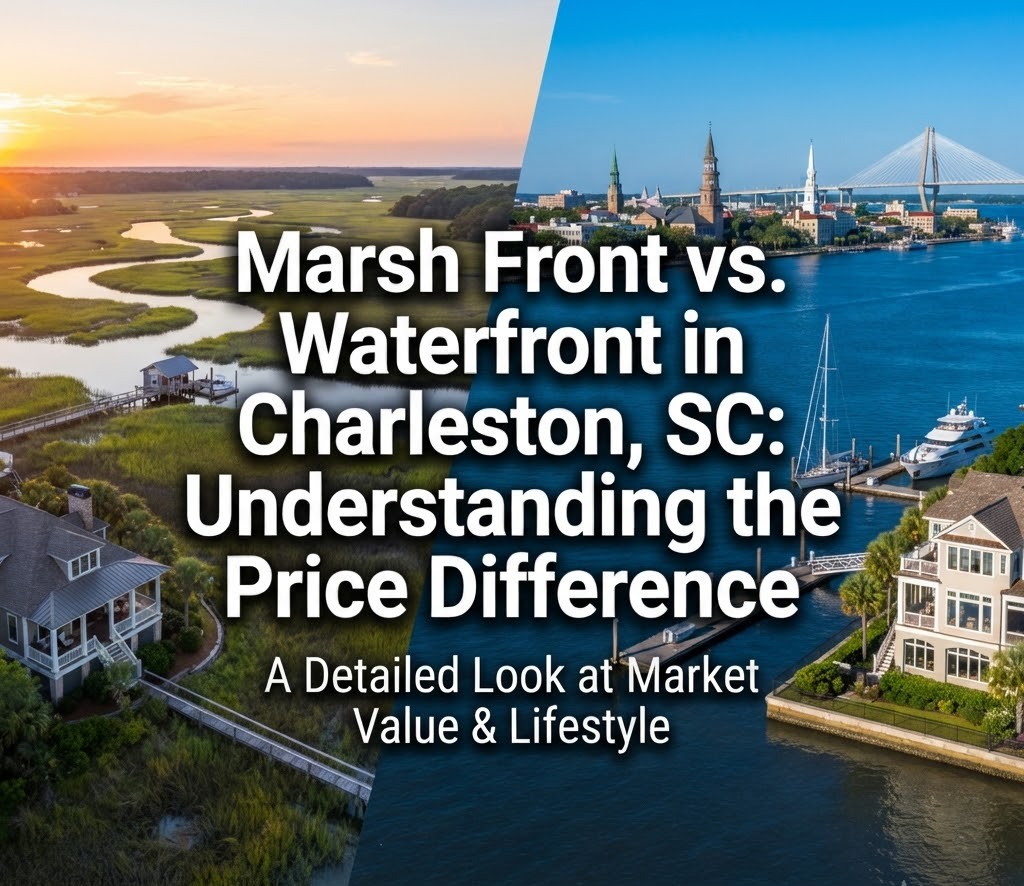
Marsh Front vs. Waterfront in Charleston, SC Understanding the Price Difference

Where Marsh Front and Waterfront Properties Are Found

James Island

James Island has long been beloved for both marsh front and tidal creek waterfront homes. Neighborhoods like Stiles Point and waterfront communities along Folly Creek offer some of the most desirable Lowcountry water-adjacent living in the region.

Mount Pleasant

In Mt Pleasant, SC, communities along the Wando River, Shem Creek, and the marsh networks between Old Village and Carolina Park offer both marsh front and true deep-water options. Premium pricing reflects the strong demand.

Johns Island

Johns Island features extensive marsh front and waterfront properties along the Bohicket Creek and surrounding waterways. Buyers can find beautiful marsh views at slightly more attainable price points than the closer-in coastal communities.

West Ashley

Ashley Harbor and other West Ashley waterfront pockets offer marsh and river frontage with relatively quick downtown access. Deep-water Ashley River homes can be especially appealing for boaters.

Daniel Island and the Beaches

Daniel Island and the barrier islands all have their own mix of marsh and waterfront properties, each with distinct lifestyle implications.

Practical Considerations Before You Buy

Dock Construction and Permits

If you are buying a deep-water property with the intent to add a dock, confirm dock permits, allowable size, and any community restrictions before going under contract. Some properties have permit restrictions that significantly limit what you can build.

Marsh Buffer and OCRM Considerations

The South Carolina Office of Ocean and Coastal Resource Management (OCRM) regulates marsh and waterfront development carefully. Marsh setbacks, critical line considerations, and pier construction limits all factor into what is and is not possible on a given lot.

Insurance Costs

Both marsh front and waterfront properties usually carry higher insurance costs than non-waterfront homes, particularly for flood and wind coverage. Get quotes during due diligence.

Elevation and Flood Zones

Most waterfront and marsh front homes sit in higher-risk flood zones. Elevation certificates, base flood elevations, and current FEMA mapping all affect costs and insurability.

How to Decide What Is Right for You

The decision often comes down to lifestyle priorities. If active boating is central to your daily routine, deep-water waterfront delivers the most utility, and the premium can be well worth it. If beautiful Lowcountry views, abundant wildlife, and a tranquil natural setting matter more than direct boating access, marsh front may deliver more of what you love at a more attainable entry point. Many buyers also find a sweet spot in tidal creek properties that offer at least seasonal boating access while costing less than full deep-water frontage.

Strategy for Buyers

If waterfront or marsh front is on your radar, build the right team early. Work with a Realtor who specializes in waterfront properties, a coastal-savvy lender, and an insurance agent who routinely writes policies in higher-risk zones. Be specific about what you want to do with the water. Boating? Fishing? Just enjoying the view? The answer points to different property types and price ranges. And take the time to visit potential homes at different tides. The marsh at low tide looks very different from the marsh at high tide, and you should love both.

Key Takeaways

Marsh front and deep-water waterfront in Charleston deliver two very different lifestyles at two very different price points. Deep-water access supports active boating, dock-front entertaining, and broader utility, which drives premium pricing. Marsh front delivers stunning natural views, abundant wildlife, and a tranquil Lowcountry feel at often more attainable values. Both can be wonderful places to live. The right choice depends on how you want to spend your time, what your budget allows, and how the practical realities of permits, insurance, and flood zones align with your priorities. With the right guidance, both paths can lead to a home that feels uniquely tied to the Lowcountry.

Frequently Asked Questions

Is marsh front the same as waterfront in Charleston?

Not really. Marsh front typically describes homes overlooking tidal marshes, with limited or no direct boating access from the property. Waterfront usually describes homes on navigable tidal creeks, rivers, or harbors with the ability to support docks and active boating use.

Can I build a dock on a marsh front property?

It depends on the specific lot, water depth, marsh setbacks, and state and local permitting. Some marsh front lots support pier construction. Many do not. Always confirm during due diligence before buying with dock intent.

Does marsh front lose value compared to deep-water waterfront?

Both can hold and grow value, but deep-water waterfront often appreciates faster because of inherent scarcity and the utility it delivers. Marsh front still tends to hold value well, especially in established neighborhoods with strong demand.

How much more does waterfront cost compared to non-waterfront in Charleston?

It depends on specific neighborhood and price tier, but the premiums can be significant, especially for deep-water properties with docks. A local Realtor can build comparable analyses for the specific markets you are considering.

Is insurance different for marsh front and waterfront homes?

Both typically require higher wind and flood premiums than non-waterfront properties. Specific costs depend on flood zone, elevation, and the structure itself. Always get quotes early in due diligence.

About Greg Harrelson

Greg Harrelson is a seasoned Realtor® with more than 30 years of experience serving the Carolina markets. As the founder of Century 21 The Harrelson Group, Greg has built his career helping buyers, sellers, and investors achieve success in every corner of the coastal Carolina real estate market. His expertise spans residential homes, investment properties, land development, and coastal condos. Known for his deep local knowledge, innovative marketing strategies, and commitment to personal service, Greg consistently helps clients reach their real estate goals while navigating the ever-changing market with confidence and precision.

Posted in For Buyers
July 3, 2026

Kiawah Island, SC: A Private Paradise Where Luxury Meets Nature

For travelers and buyers who know coastal South Carolina, Kiawah Island needs no introduction. With 10 miles of pristine beach, championship golf, abundant wildlife, and a tightly controlled development plan, Kiawah has become one of the most coveted barrier-island addresses in the country. It is the rare community that delivers world-class amenities without sacrificing its natural beauty. For buyers exploring Kiawah Island real estate, here is what makes the island so special and what to know before making a move.

What Makes Kiawah Different

Kiawah was master-planned with conservation at its heart. From the beginning, developers placed strict limits on density, building heights, and lot coverage to preserve the maritime forest, marshes, dunes, and wildlife habitats that define the island. The result is a residential community where homes feel woven into the landscape rather than imposed on it. Live oaks, palmettos, and natural marsh views dominate, and protected species like loggerhead turtles and bobcats still thrive throughout the island.

That commitment to conservation is one of the biggest reasons Kiawah continues to attract buyers from across the country who want a private, natural retreat without giving up modern luxury.

The Golf and Resort Lifestyle

Few coastal communities can rival Kiawah's golf offerings. The Ocean Course at Kiawah has hosted the Ryder Cup and multiple PGA Championships, and its Pete Dye design ranks among the most dramatic and difficult oceanfront courses in the world. The Turtle Point, Osprey Point, Oak Point, and Cougar Point courses round out a portfolio that supports both club members and serious traveling golfers.

Beyond golf, the resort delivers tennis, spa, fitness, dining, and beach club access. For full-time residents and second-home owners alike, the daily lifestyle includes easy access to amenities that most coastal communities can only dream of.

The Real Estate Mix on Kiawah

Oceanfront and Beach-Adjacent Homes

Oceanfront homes on Kiawah are among the most exclusive properties on the entire East Coast. Inventory is genuinely limited, and well-located oceanfront residences regularly set records for the broader Charleston region.

Golf-View and Lagoon Homes

Homes overlooking the golf courses, lagoons, and freshwater wetlands deliver beautiful views and slightly more attainable pricing than direct oceanfront. Many of these homes also enjoy proximity to the resort amenities, which makes them especially attractive for active retirees and second-home buyers.

Villas and Condominiums

For buyers who want easier access to Kiawah's amenities without the responsibility of a single-family home, villa and condo options offer lower-maintenance entry points to island living. These are also popular with families who want a vacation home that can produce some rental income during peak seasons.

Kiawah River: A Newer Twist on Island Living

Just outside the gates of Kiawah Island, the Kiawah River community has emerged as an attractive option for buyers who want the Lowcountry lifestyle with a different feel than the resort island itself. Designed around a working farm, expansive marshfront views, and a slower pace, Kiawah River appeals to buyers who want privacy and natural beauty without the resort emphasis. Many buyers compare both communities side by side before choosing.

Comparing Kiawah to Other Coastal Communities

Versus Seabrook Island

Just next door, Seabrook Island offers a quieter, less resort-driven version of upscale coastal living. Both communities share a similar natural setting and gated security, but Seabrook tends to feel more family-driven and intimate. Many buyers shop both before deciding which fits best.

Versus Isle of Palms

The Isle of Palms delivers a more vacation-rental-oriented beach experience, with strong investor demand and an active short-term rental scene. Kiawah's tighter management of rentals, lower density, and more residential character make it feel quite different.

Versus Folly Beach

Folly Beach offers a casual, surf-friendly, locally weird beach-town personality. Kiawah is the polished, manicured, intentionally exclusive counterpart. Both are wonderful, just very different in tone.

Kiawah Island, SC A Private Paradise Where Luxury Meets Nature

Who Tends to Buy on Kiawah

Second-Home and Vacation Buyers

Many Kiawah owners use the island as a primary or supplemental vacation home. The combination of golf, beach, and natural amenities makes it ideal for buyers who want extended seasonal stays.

Retirees and Pre-Retirees

The relaxed pace, the abundant amenities, and the strong sense of community keep Kiawah at the top of retiree shortlists. Many buyers transition from second-home use to full-time residence as they retire.

Executives and Entrepreneurs

For executives and entrepreneurs looking for a luxury retreat within easy reach of downtown Charleston, Kiawah delivers an ideal balance. Quick access to Charleston, SC real estate markets, the airport, and major employers keeps the island connected without disrupting its quiet character.

Practical Considerations Before You Buy

Club Memberships

The Kiawah Island Club offers membership tiers with access to dining, golf, beach club, and other amenities. Membership is separate from buying a home, and the right level of membership depends entirely on how you plan to use the island. Talk with a Realtor who can explain the trade-offs.

Insurance and Flood Considerations

Like all coastal South Carolina properties, Kiawah homes require careful review of flood zone status, elevation certificates, and wind insurance options. Costs vary significantly depending on the location and elevation of the specific property.

Short-Term Rentals

Kiawah has historically managed short-term rentals in a more controlled way than nearby beach communities. If rental income is part of your plan, confirm current restrictions and registration requirements before committing.

HOA and Community Fees

Multiple layers of fees, including the master association, club membership where applicable, and any sub-community structures, all factor into the total cost of ownership. Build a complete picture with your Realtor and lender before going under contract.

The Drive to Town and Practical Access

Kiawah is accessed via Bohicket Road through Johns Island. The drive to downtown Charleston takes about 45 minutes depending on traffic, with the airport another 15 minutes beyond. While Kiawah feels remote in the best possible way, getting to dining, healthcare, and major services is still very manageable.

Strategy for Kiawah Buyers

If Kiawah is on your radar, plan multiple visits before buying. Tour the island at different times of year, walk multiple neighborhoods, and try the amenities you would actually use. Work with a Realtor who specializes in Kiawah and can guide you through club memberships, rental restrictions, and the practical realities of island ownership. The right Kiawah home can be one of the most rewarding purchases a coastal buyer ever makes, but careful preparation pays dividends.

Key Takeaways

Kiawah Island delivers a rare combination of unspoiled natural beauty, world-class amenities, and quietly luxurious residential living. With championship golf, miles of pristine beach, a deeply preserved natural landscape, and a community committed to maintaining its character, Kiawah remains one of the most desirable destinations in the coastal Southeast. Whether you are searching for a second home, planning your retirement, or evaluating a luxury investment property, the island rewards buyers who arrive prepared, understand the layers of ownership, and lean on a Realtor who knows Kiawah inside and out.

July 2, 2026

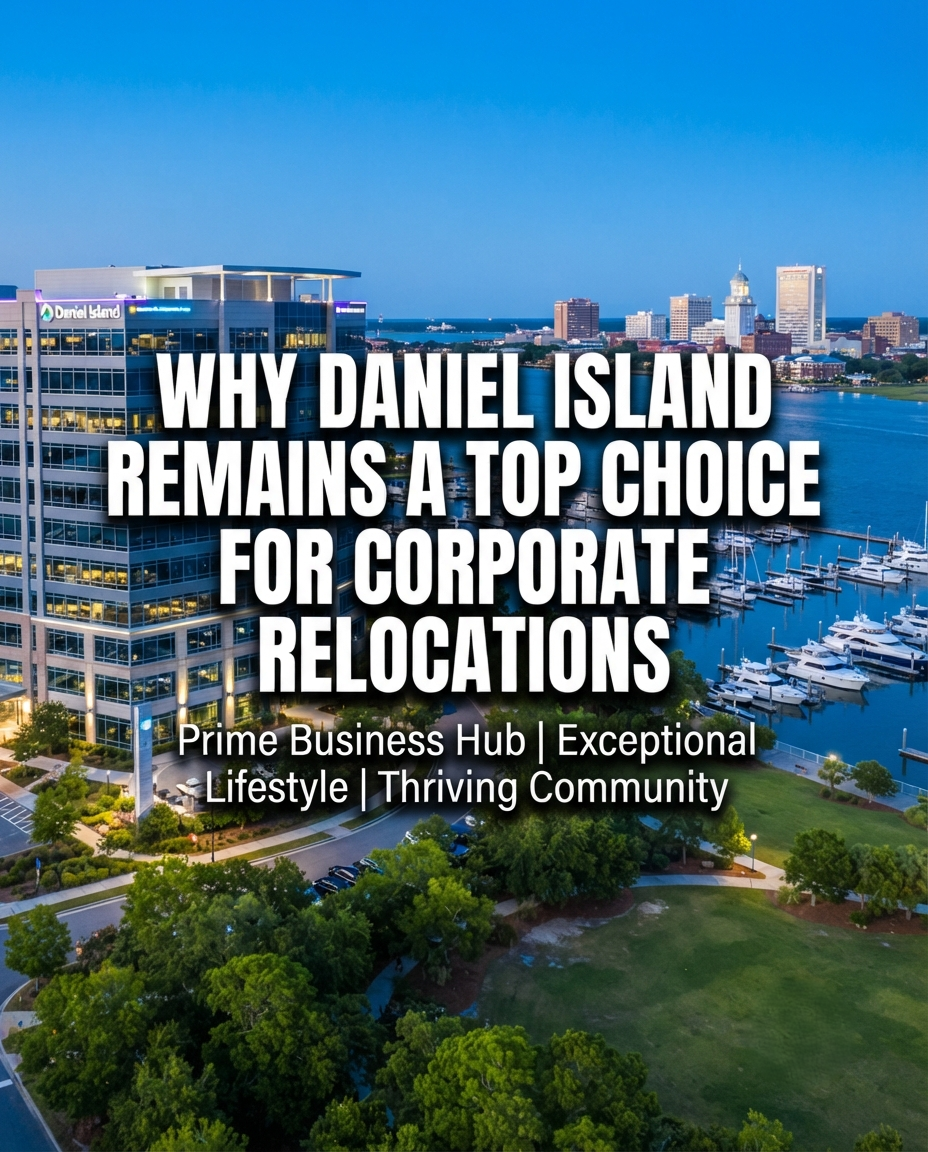
Why Daniel Island Remains a Top Choice for Corporate Relocations

Corporate relocations are one of the most important forces shaping the Charleston real estate market, and one community consistently rises to the top of relocating buyers' shortlists: Daniel Island. The combination of walkability, top-rated schools, professional amenities, and a quick commute to downtown makes it a natural fit for executives, transferring employees, and dual-income families landing in the Lowcountry from across the country. For employers, recruiters, and relocating professionals exploring Charleston, SC real estate, here is why Daniel Island continues to lead.

What Makes Daniel Island a Relocation Magnet

Walkable, Amenity-Rich Living

Daniel Island was master-planned with walkability and lifestyle in mind. Sidewalks, parks, schools, restaurants, and small commercial centers cluster across the island, making daily life feel both convenient and connected. For relocating families used to suburban car-only living, the change of pace is one of the biggest selling points.

Top-Rated Schools On the Island

Daniel Island Elementary and Daniel Island Middle School are both highly rated and located within the community. Families with school-age children consistently rank schools as a top priority during a relocation, and the convenience of having strong options on the island removes a major source of stress.

Quick Commute to Downtown and Major Employers

The drive from Daniel Island to downtown Charleston typically runs 20 minutes or so. The island is also well-positioned for North Charleston, Mount Pleasant, and the airport, which makes it especially attractive for executives whose work requires meetings across the region.

Strong Real Estate Across Price Tiers

Daniel Island delivers a broad range of housing, from townhomes and small cottages on the village side to family homes throughout the South Side and luxury estates in Daniel Island Park. This range allows relocating households to find the right fit at the right budget without leaving the community.

Who Is Moving to Daniel Island

C-Suite Executives

Senior executives relocating to Charleston for roles at Boeing, the Port, healthcare systems, banking, and the growing tech sector frequently choose Daniel Island Park for its gated luxury and club access. The neighborhood combines high-end housing, golf, tennis, and the kind of community network that supports executive families.

Mid-Career Professionals

Mid-career professionals and managers landing in Charleston often gravitate toward the South Side and Park Side neighborhoods of Daniel Island. The amenities, schools, and lifestyle balance with strong real estate value at the family-home tier.

Dual-Career Households

Dual-career households appreciate Daniel Island's location, which gives both partners reasonable commutes to a variety of major employers. The island's proximity to Mount Pleasant, downtown, and North Charleston keeps options open if one job changes during your time here.

Empty-Nesters and Pre-Retirees

Empty-nesters and pre-retirees increasingly choose Daniel Island for the walkability, restaurants, and tight community feel. Many use the island as a launchpad for retirement, sometimes purchasing a smaller home and gradually transitioning to part-time work.

Specific Daniel Island Neighborhoods to Know

Daniel Island Park

Gated, club-anchored, and centered around the Daniel Island Club's golf and amenity facilities. Premium pricing, but the lifestyle is hard to replicate anywhere else in the Charleston region.

South Side Neighborhoods

Family-oriented neighborhoods like Pierce Park, Codner's Ferry Park, and Smythe Park attract relocating families who want a true neighborhood feel with quick access to schools and amenities.

Park Side and the Village

Townhomes and smaller single-family homes in the walkable village area, including communities like Etiwan Park and Center Park Townhomes appeal to younger executives, downsizers, and dual-career professionals.

Why Daniel Island Remains a Top Choice for Corporate Relocations

Why Corporate Relocators Choose Daniel Island Over Alternatives

Versus Mount Pleasant

Mount Pleasant offers broader options, beach access, and slightly more inventory. Daniel Island offers tighter community feel, walkability, and the resort-like infrastructure that many corporate relocators appreciate. Many relocating professionals shop both before deciding.

Versus Downtown Charleston

Downtown offers historic charm and walkable urban living, but at premium prices, with parking and lot constraints. Daniel Island offers a more family-friendly version of walkable living with more space, more parking, and stronger school access.

Versus Summerville

Summerville offers stronger value and broader new-construction options, but with a longer commute to downtown. Daniel Island sacrifices some affordability for proximity, amenity density, and walkability.

What Corporate Relocators Should Know Before Buying

Community Assessments and Club Fees

All Daniel Island residents pay an island-wide community fee that supports amenities, security, and maintenance. Daniel Island Park residents may have additional fees tied to the club. Build these into your total cost of ownership conversation with the lender.

Flood Zones and Insurance

Specific parts of Daniel Island sit in flood zones. Always confirm flood zone status, elevation, and insurance options for any property under consideration.

Relocation Timing

Daniel Island inventory moves consistently but can be limited at specific price points or in certain neighborhoods. Relocating buyers benefit from starting their home search as early as possible and being prepared to act quickly when the right property appears.

Schools and Boundaries

Confirm school assignments for the specific home you are considering. Daniel Island's on-island schools serve much of the community, but specific boundaries can affect older or newer sections of the island.

Working With a Relocation-Friendly Realtor

The right Realtor can make a corporate relocation dramatically smoother. Look for an agent who works Daniel Island regularly, has experience supporting long-distance buyers, and understands the practical realities of corporate relocation timelines, temporary housing, contingency-free offers, and lender-employer coordination. A great Realtor can also tap into local vendors, contractors, schools, and community organizations that help your family land more easily.

Strategy for Relocating Professionals

If Daniel Island is on your radar, plan an early scouting trip and tour multiple sections of the island in person. Pay attention to commute patterns, school proximity, and the social and community life that matters most to your family. Get pre-approved with a coastal-savvy local lender, and start building your team well before you need to make decisions under pressure. Daniel Island rewards relocating buyers who arrive prepared.

Key Takeaways

Daniel Island continues to top the relocation shortlist for a wide range of corporate professionals moving to the Charleston region. The combination of walkability, schools, amenities, and proximity to downtown and major employers gives it a unique identity in the metro. Whether you are an executive landing in a leadership role, a mid-career professional transferring with a growing company, a dual-career household balancing two careers, or an empty-nester transitioning into a new chapter, Daniel Island offers a community designed to make the move feel less like relocation and more like coming home. With the right preparation and a Realtor who specializes in the island, your move can quickly turn into one of the best decisions your family has ever made.

July 1, 2026

How to Sell Your Charleston, SC Home While Living in It with Kids and Pets

Selling a home is stressful enough on its own. Selling a home while you, your kids, and your pets are still actively living in it takes that stress to another level. The good news is that thousands of Charleston-area families do it successfully every year. With smart preparation, the right systems, and a Realtor who knows how to support a busy household, you can keep daily life running while maximizing your sale outcome. Here is how to make the process manageable for any owner of Charleston, SC real estate who is selling while still living in the home.

Why This Sale Type Requires a Different Playbook

Vacant homes are easier to stage, easier to show, and easier to keep clean. Lived-in homes are full of personality, daily clutter, and the small chaos of real family life. Buyers, however, want to picture themselves living in the space, not in the middle of yours. Bridging that gap is where the strategy comes in.

Start With a Realistic Decluttering Plan

Sort by Room

Go room by room. Identify what stays, what goes into storage, and what gets donated or thrown out. Aim for a roughly 30 percent reduction in visible items.

Get Storage Off-Site

Renting a storage unit or pod for the duration of the sale can be one of the smartest decisions you make. The goal is to clear surfaces, closets, and corners so the home feels spacious, not crowded.

Involve the Kids in Age-Appropriate Ways

Give kids ownership of decluttering their rooms in age-appropriate ways. Older kids can sort their own belongings. Younger kids can help pick favorite toys to keep accessible while the rest go to storage.

Stage With Real Life in Mind

Photo-Ready Surfaces

Counters, tabletops, and entryways should be photo-ready every day. Designate landing spots for daily clutter so things do not pile up on the surfaces buyers will see. This matters especially in family-popular communities like Park West and Cane Bay Plantation, where buyer competition can be strong.

Strategic Lighting

Open blinds, replace bulbs to a consistent warm or daylight tone, and add lamps in dark corners. Bright homes show much better than dim ones.

Hide the Mundane

Trash cans, litter boxes, kid art clusters, and pet beds should have designated hiding spots when showings are scheduled. Practice the routine so it becomes automatic. 

How to Sell Your Charleston, SC Home While Living in It with Kids and Pets

Pet Strategy

Showings Without Pets in the Home

Whenever possible, take pets with you during showings. Buyers may be allergic, anxious around pets, or simply unable to picture the home without distractions.

Set Up a Pet-Sitter Network

Build a list of trusted family members, friends, or local pet daycares you can call on short notice. A reliable pet-sitting plan is one of the most underrated selling tools.

Remove Pet Evidence Before Showings

Vacuum pet hair, store crates and bowls in closets or the garage, and refresh the air with light, neutral scents. Avoid heavy fragrance, which signals masking.

Disclose Pets

Your Realtor should disclose to showing agents that pets live in the home, both for safety and to set buyer expectations.

Kid Strategy

Consistent Cleanup Routines

Build a 15 to 30 minute morning routine for clearing surfaces, making beds, and refreshing the home. The goal is to have your home showing-ready every day, even when a tour is not scheduled.

Activity Bags for Showings

Pack a go-bag for each child with quiet activities, snacks, water, and entertainment. When a showing is scheduled, you can leave quickly without scrambling.

Pre-Plan Showing Destinations

Identify a few easy destinations within 10 to 15 minutes where you can wait out a showing. Many West Ashley and Mt Pleasant families also lean on neighborhood parks and community amenity centers for these stretches. Parks, libraries, family member's homes, and coffee shops with kid-friendly spaces all work.

Communicate the Plan With Older Kids

Older kids and teens benefit from knowing why the home is being maintained at a higher standard. Setting clear expectations and incentives often reduces conflict.

Working With Your Realtor

Showing Schedule Management

Work with your Realtor to set clear showing parameters. For example, requiring two-hour notice, blocking certain times of day, and limiting weekend showings to specific windows. This balances buyer access with your family's reality.

Designated Quiet Hours

Naps, homework, dinner, bedtime, and morning routines deserve protection. Your Realtor can block showings during these windows with reasonable advance notice.

Lockbox Etiquette

Trust the lockbox process but also work with your Realtor to ensure all showings are tracked and confirmed. Most listing platforms make this easy.

The Showing Day Checklist

When a showing is scheduled, follow a consistent routine. Make beds. Clear all visible surfaces. Run the vacuum. Wipe down the kitchen and bathrooms. Empty trash cans. Open blinds. Turn on lights. Set the thermostat to a comfortable temperature. Take pets and kids out. Lock up and leave. The whole sequence usually takes 30 to 45 minutes when practiced.

Curb Appeal Counts Just as Much

Buyers form their first impression before they walk in the door. Keep the front yard, walkway, and front door area pristine. Pick up toys, lawn equipment, and pet items from the front yard. A welcoming front porch can shift a buyer's mood before the showing even starts.

Mental Health Matters Too

Selling while living in the home is genuinely exhausting. Build in breaks. Celebrate small wins. Eat out occasionally to avoid kitchen cleanup. Lower expectations for non-essentials during the listing period. The sale is a season, not your forever state, and protecting your family's wellbeing matters more than perfect showings.

Strategy for Family Sellers

If you are selling while living in a Charleston home with kids and pets, lean into preparation, systems, and the support of a Realtor who has handled this specific situation many times. Build your routines before the listing goes live. Have a pet plan and a kid plan locked in. Communicate clearly with your Realtor about windows that work for your family. And give yourself grace. The combination of a well-prepared home, a focused marketing plan, and reasonable family-friendly logistics is what gets families to closing day with their sanity intact.

Key Takeaways

Selling a Charleston home while you, your kids, and your pets are still living in it is absolutely doable. The key is to combine smart preparation with daily systems that protect both the home's showing appeal and your family's wellbeing. Declutter aggressively, stage with real life in mind, build a pet and kid plan that works on short notice, and work closely with a Realtor who understands what your family is balancing. With the right approach, you can keep your home photo-ready, support the demands of a real sale, and still take care of the people and animals you love most.

Frequently Asked Questions

How much notice should I require for showings when I have kids and pets?

A two to four hour minimum is reasonable. This gives your family time to gather pets, kids, and any items that should not be in the home during a showing. Your Realtor can help set and enforce these guidelines.

Should I disclose that we have pets in the listing?

Your Realtor will typically share with showing agents that pets live in the home. Whether you disclose this publicly in marketing copy depends on your specific situation, but safety and buyer expectations should be the priority.

What if my home does not show as well as a vacant one?

Lived-in homes can still show extremely well with strong preparation, professional photos, and consistent routines. Buyers expect homes to be lived in, especially family homes. The key is to maintain order, not perfection.

How long should I plan for the showing process?

The active Charleston, SC real estate showing period typically lasts a few weeks but can stretch in slower markets. Plan with your Realtor for what is realistic in your specific neighborhood and price point.

Is it worth renting a storage unit during the sale?

For most family sellers, yes. The cost of a storage unit for a few months is usually one of the highest-ROI investments you can make in your listing.

About Greg Harrelson

Greg Harrelson is a seasoned Realtor® with more than 30 years of experience serving the Carolina markets. As the founder of Century 21 The Harrelson Group, Greg has built his career helping buyers, sellers, and investors achieve success in every corner of the coastal Carolina real estate market. His expertise spans residential homes, investment properties, land development, and coastal condos. Known for his deep local knowledge, innovative marketing strategies, and commitment to personal service, Greg consistently helps clients reach their real estate goals while navigating the ever-changing market with confidence and precision.

Posted in For Sellers
June 30, 2026

Best Charleston-Area Coffee Shops to Work From

Remote work has reshaped how people live in the Charleston area, and one of the most welcome changes has been the rise of coffee shops that double as comfortable workspaces. Strong wifi, comfortable seating, great coffee, and a sense of community make the difference between a productive morning and a wasted one. Whether you live downtown, in West Ashley, on Daniel Island, or out toward Mount Pleasant, here is a guide to the best coffee shops to plug in and get work done across the Lowcountry. For anyone exploring Charleston, SC real estate as a remote-work-friendly destination, the local coffee scene is a quiet but powerful selling point.

Why Coffee Shop Culture Matters in Charleston

Charleston has long had a strong coffee culture, but the past few years have brought a new wave of cafes designed with remote workers in mind. Many local owners pay attention to power outlets, wifi speeds, ambient noise levels, and the kind of seating that makes a few-hour work session genuinely comfortable. The result is that no matter where you live in the metro, you can find a local cafe that supports a productive routine.

Downtown Charleston Favorites

Kudu Coffee & Craft Beer

A longtime downtown institution, Kudu offers a beautiful outdoor courtyard, strong wifi, and a relaxed atmosphere that supports long work sessions. Locals have made Kudu a go-to for years.

Black Tap Coffee

Black Tap leans more into the coffee-purist crowd, with a quieter vibe and excellent espresso. Smaller seating area, but a great choice for short, focused work blocks.

Second State Coffee

Second State has multiple downtown locations and has become a daily fixture for many downtown remote workers. Reliable wifi, plenty of outlets at most locations, and an atmosphere that welcomes laptops without rushing you out.

The Rise Coffee Bar at Hotel Bennett

An upscale option for client meetings and longer work sessions. Beautiful setting, premium coffee, and a quieter atmosphere than typical cafes.

Best Charleston-Area Coffee Shops to Work From

Mount Pleasant Options

Sightsee Coffee Shop

Sightsee in Mount Pleasant has built a loyal following of professionals and creatives. Comfortable seating, fast wifi, and a welcoming atmosphere make it a favorite. Easy access from major Mt Pleasant communities like Park West and Hamlin Plantation.

Coastal Coffee Roasters

Coastal Coffee Roasters offers a relaxed environment with both work-friendly indoor seating and a welcoming outdoor patio. Their roasting program means the coffee itself is genuinely outstanding.

Local Coleman Boulevard Cafes

Several smaller cafes along Coleman Boulevard and in the Mount Pleasant Town Center offer good work environments. They tend to be busiest in the morning and quieter in the afternoon.

Daniel Island Picks

Sermet's Daniel Island Cafe

While more of a restaurant, Sermet's has a coffee-bar atmosphere in the mornings that works well for solo work sessions. Plus the location in the heart of Daniel Island's walkable village makes it convenient for residents.

Local Cafes Around the Village

Daniel Island's village area has steadily added more cafe options for residents and visitors. The walkability of the area makes it especially convenient to grab a coffee, work for a couple of hours, and continue your day on foot.

West Ashley Favorites

The Daily on Magnolia Road

The Daily has become a beloved fixture of the Avondale corner of West Ashley. The bright open space, great coffee, and welcoming atmosphere make it a favorite for both quick stops and longer work sessions.

Triangle Char + Bar

More of a restaurant, but the coffee bar and patio work great in the mornings when you want a relaxed environment with food options.

Park Circle and North Charleston

Park Cafe

Located right in the heart of Park Circle, Park Cafe offers a true neighborhood coffee shop experience. Easy to work from, full of locals, and reflective of the laid-back-meets-creative vibe that has defined Park Circle's transformation.

Brewery Cafes

Park Circle's brewery scene has crossover with the coffee culture. Some of the breweries open in the morning with coffee and casual food, giving you a relaxed alternative to a traditional cafe.

Summerville and Outer Suburbs

Eva's Restaurant and Coffee in Summerville

Eva's offers a classic small-town cafe vibe in downtown Summerville. Great for residents of Summerville who want a hometown spot that supports remote work without driving toward downtown Charleston.

Local Roasters in Cane Bay and Nexton

The growth of Cane Bay Plantation and Nexton has brought more cafe options to the master-planned community areas, including coffee shops that double as community gathering spaces.

What to Look for in a Work-Friendly Coffee Shop

Wifi Reliability

Test before committing to a long session. Some cafes have surprisingly slow connections during peak hours.

Outlets and Seating

Look for cafes that have invested in power outlets at most seats. The best work spots usually have a mix of bar seating, two-tops, and a few larger tables for spreading out.

Noise Level and Vibe

Some cafes lean into the buzz of conversation. Others prioritize a quieter atmosphere. Match the vibe to your work style.

Food and Coffee Quality

If you are going to spend hours, the quality of the products matters. Local roasters and food programs are usually worth the small premium.

Pet and Patio Access

Many of the best Charleston coffee shops have dog-friendly patios, which is a major bonus if you want to bring your work buddy along.

How Coffee Culture Shapes Where You Live

For remote workers, coffee shop access can quietly shape your daily routine. Living within walking or biking distance of a great cafe can be a real lifestyle upgrade. Downtown, the Park Circle area, the Avondale corner of West Ashley, the Daniel Island village, and Mount Pleasant Town Center all support coffee-shop walkability. As you weigh neighborhoods, the cafe scene around your home matters more than most buyers realize.

Key Takeaways

Charleston's coffee scene has matured into something genuinely supportive of remote work, with strong options across nearly every part of the metro. Downtown delivers the deepest concentration of work-friendly cafes. Mount Pleasant, Daniel Island, West Ashley, and Park Circle each offer their own local favorites. Even outer suburbs like Summerville continue to add cafe options that support residents who want to work outside the home a few days a week. For buyers and renters alike, the local coffee culture is one more reason that Charleston has become such a strong destination for the remote-work generation. Pick a neighborhood with a cafe you love walking to, and you have already made one of the small daily decisions that quietly improves life in the Lowcountry.

Posted in Lifestyle
June 29, 2026

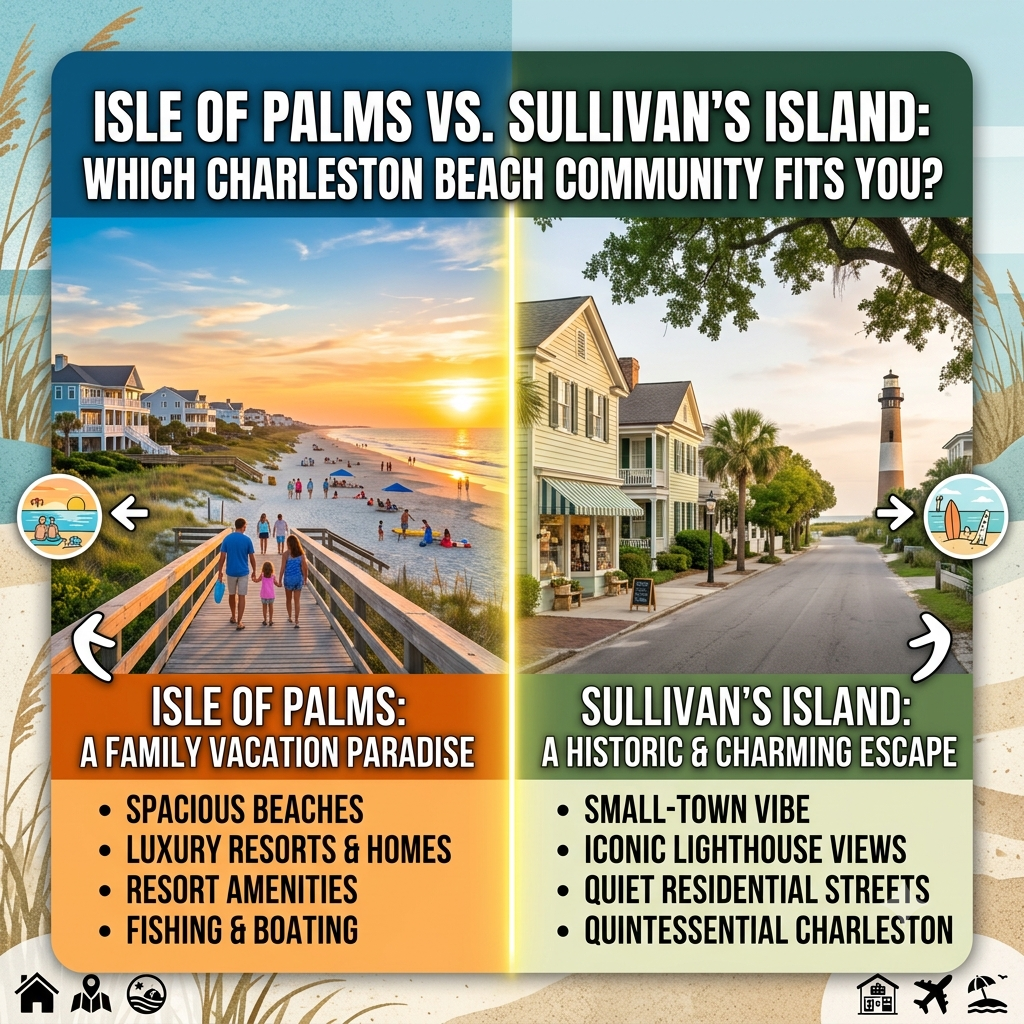
Isle of Palms vs. Sullivan's Island: Which Charleston Beach Community Fits You?

If you are dreaming of life at a Charleston beach, two names stand out: Isle of Palms and Sullivan's Island. They sit side by side along the Atlantic, separated by a tidal creek and Breach Inlet, but the two communities could not feel more different. One leans into resort-style amenities, vacation rentals, and family-friendly beach living. The other holds tight to a quiet, residential, locally controlled character. Both are extraordinary places to live, and choosing between them comes down to lifestyle, real estate, and how you want to spend your weekends. Whether you are shopping Isle of Palms real estate or Sullivan's Island real estate, here is what to know about the differences.

A Quick Snapshot of Each Beach

Isle of Palms

Isle of Palms is a true beach town. Roughly seven miles of beach, a vibrant front beach area with restaurants and bars, the Wild Dunes resort and golf community on the north end, and a thriving vacation rental market all give the island its personality. Families, second-home buyers, and investors all gravitate to IOP for the combination of recreation, amenities, and active beach life.

Sullivan's Island

Sullivan's Island, just over Breach Inlet, is the quieter, more residential cousin. The town has long worked to preserve its low-density, residential character. There are no large hotels, very few short-term rentals, and the local feel is one of the most carefully guarded in coastal South Carolina. Middle Street offers a tight cluster of restaurants and small businesses, but the overall vibe is laid-back, neighborhood-driven, and intentionally quiet.

Lifestyle Comparison

Daily Life on Isle of Palms

IOP is built for active beach living. Mornings start with sunrise walks on the beach. Daytime brings paddleboarding, fishing, golf, kids on bikes, and the steady sound of front-beach restaurants firing up. Evenings often involve dinner along Ocean Boulevard, sunset on the harbor side, or a quiet patio dinner with friends. The Wild Dunes side offers a more resort-style cadence with the Wild Dunes Resort amenities and the gated golf community feel.

Daily Life on Sullivan's Island

Sullivan's Island feels like a true neighborhood that happens to sit on the beach. Residents bike everywhere, walk to Middle Street for dinner, and enjoy long, unhurried mornings on the beach. The pace is slower, more residential, and far less driven by tourism. Many homes pass through families across generations, and the community pride is palpable.

Real Estate Comparison

Pricing

Both islands command premium pricing, but in different ways. Sullivan's Island has some of the highest price-per-square-foot in the entire Charleston region, driven by extreme scarcity and the limited residential nature of the island. Isle of Palms offers a wider range, from oceanfront luxury homes and Wild Dunes condos to interior streets and harbor-side properties that can be more attainable.

Inventory

Sullivan's Island inventory is extremely limited. Many homes are passed through generations or sell privately without ever hitting the public market. IOP inventory is more active, with regular turnover in vacation properties, primary residences, and condos.

Property Types

Sullivan's Island is dominated by single-family residential homes, often elevated, with varying lot sizes and architectural styles. Isle of Palms includes everything from beachfront single-family homes to villas, condos, and townhomes within Wild Dunes and elsewhere on the island.

 Isle of Palms vs. Sullivan's Island: Which Charleston Beach Community Fits You?

Short-Term Rental Rules

One of the biggest practical differences. Sullivan's Island has historically taken a much more restrictive stance on short-term rentals. Buyers should never assume they can rent a Sullivan's home on a nightly basis without confirming current ordinances directly with the town. Isle of Palms has a long-standing vacation rental market, with permits required and town regulations actively managed. Investors targeting short-term rental income generally focus on IOP rather than Sullivan's Island.

Community Character

Isle of Palms

IOP's community feels both tight-knit and tourist-friendly. The front beach area is energetic in summer. Wild Dunes operates almost like its own resort community. Families with kids find easy social and recreational options across the island.

Sullivan's Island

Sullivan's prides itself on residential character. Year-round community events, small-town schools, and a strong neighborhood ethic shape daily life. Even with the steady stream of beach visitors, the island maintains a distinctly local feel.

Schools and Family Considerations

Both islands feed into well-regarded Mount Pleasant area schools. Sullivan's Island Elementary is particularly beloved, with strong community involvement. IOP families also benefit from access to the highly rated Mount Pleasant school district. Healthcare and major services are a short drive away in Mount Pleasant.

Insurance, Flood, and Practical Considerations

Both islands sit in coastal flood zones, and wind and flood insurance are significant ongoing costs. Elevation certificates matter. Hurricane preparation is a year-round commitment. Older homes on both islands may require updates to systems that wear faster in salt-air environments. Talking with a coastal insurance specialist before making an offer is essential.

Who Tends to Choose Isle of Palms

Active families, vacation rental investors, second-home buyers, and golf-and-resort-oriented households often gravitate to IOP. The wider range of property types, the larger inventory, the resort amenities, and the established vacation rental market all align with these buyers.

Who Tends to Choose Sullivan's Island

Long-term residents, multi-generational families, buyers who prioritize quiet residential character, and those who value scarcity and a true island-neighborhood feel often choose Sullivan's. The limited inventory rewards patience and deep local knowledge.

How to Decide

Visit both islands at different times of day and different seasons. Walk Middle Street on a Sullivan's afternoon and the front beach on IOP on a busy summer Saturday. Spend a quiet winter morning on each island. The community that resonates most with how you want to live almost always reveals itself. From a real estate strategy standpoint, the two markets behave differently, so a Realtor who covers both consistently and knows how to navigate inventory, pricing, and short-term rental rules in each is essential.

Strategy for Buyers

Both islands require strong preparation. Get pre-approved early with a coastal-savvy lender. Line up insurance quotes before going under contract. Work with a Realtor who has closed deals on both islands and who can tell you the practical differences between the streets, neighborhoods, and price tiers. Whether you fall in love with the resort-style energy of Wild Dunes or the quiet residential cool of Sullivan's, you can win in either market with the right plan.

Key Takeaways

Isle of Palms and Sullivan's Island are both extraordinary places to live, but they offer very different experiences. IOP delivers active beach-town living, more diverse real estate, and a vibrant vacation rental market. Sullivan's Island delivers quiet residential character, severely limited inventory, and a strict residential identity that has been carefully protected. Pricing on both is premium, but the dynamics differ significantly. The right answer for you depends entirely on how you want to spend your time. Either way, you will be living in one of the most beautiful stretches of coastline in the country.

June 26, 2026

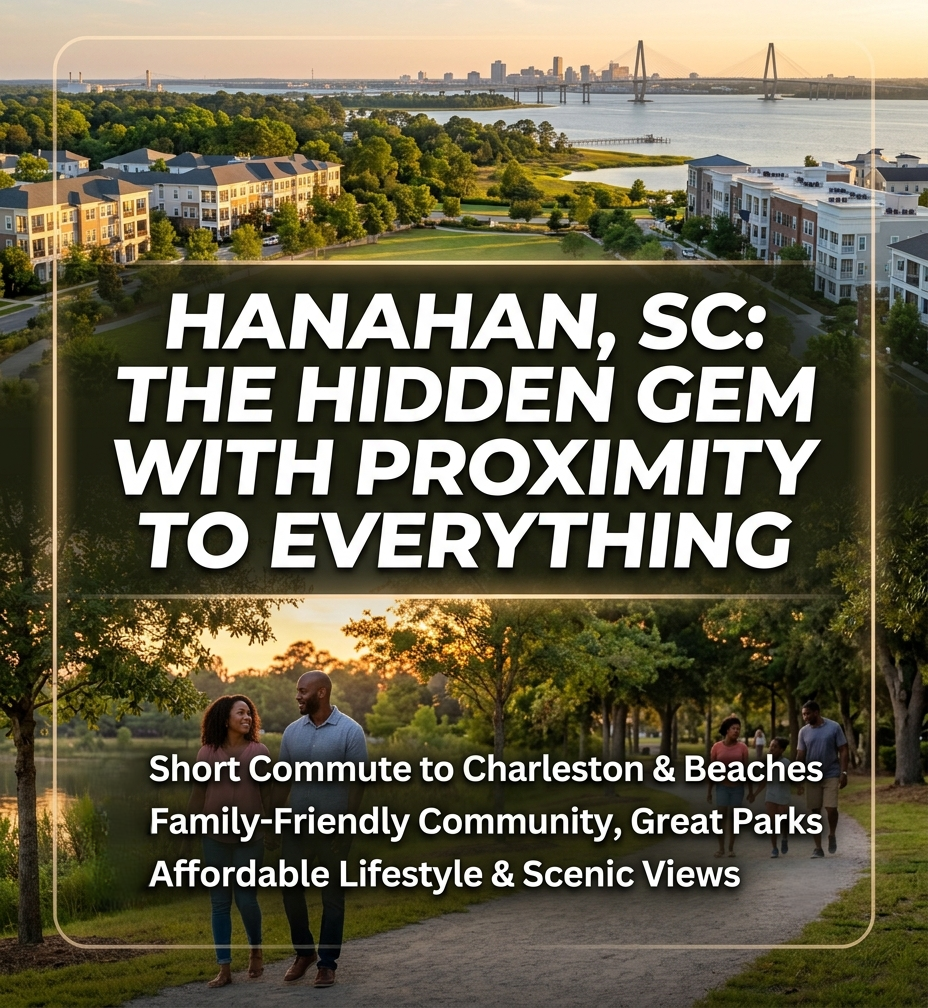
Hanahan, SC: The Hidden Gem with Proximity to Everything

If you ask longtime Lowcountry locals to name an underrated place to live in the Charleston region, Hanahan comes up again and again. Tucked between Charleston, North Charleston, and Goose Creek, with quick access to Joint Base Charleston and the major employment hubs along I-26, Hanahan delivers something that has become increasingly rare in the metro: a true small-town feel that is still within easy reach of everything. For buyers exploring Hanahan real estate, this is a community worth a serious look.

Why Hanahan Feels Different

Hanahan is small. The population is a fraction of nearby Mount Pleasant or Summerville, and that scale shows up in how residents experience daily life. Schools feel local. Restaurants and coffee shops know their regulars. The town hosts community events that residents actually attend. And the daily commute does not require navigating long suburban arteries to reach the rest of the metro. The result is a quieter, more grounded lifestyle that families, retirees, and military households all appreciate.

The Geographic Advantage

Location is Hanahan's superpower. The city is roughly equidistant from downtown Charleston, North Charleston's job centers, Joint Base Charleston's Naval Weapons Station portion, Goose Creek, and Summerville. Quick access to I-26 and Highway 52 connects residents to all the major destinations in the metro. For households where one spouse works downtown and another works at Boeing or the base, Hanahan often hits the sweet spot.

Tanner Plantation: The Crown Jewel

One of Hanahan's most popular communities is Tanner Plantation. The waterfront master-planned community features homes ranging from townhomes to larger family residences, an amenity center, pools, walking trails, and access to the Cooper River. Tanner has become a top landing spot for military families, professionals, and out-of-state relocators seeking newer construction with strong long-term value.

Dominion Village and Other Hanahan Communities

Dominion Village offers another popular option in Hanahan, with attainable family-friendly homes and a strong neighborhood feel. Other Hanahan neighborhoods range from older established communities to newer infill construction, providing buyers with a range of price points and home styles.

Lifestyle Inside Hanahan

Outdoor Living

Hanahan has invested in parks, ball fields, and the Hanahan Recreation Complex, which gives families easy access to sports, programs, and outdoor space. The Cooper River and the surrounding waterways offer fishing, kayaking, and boating opportunities for waterfront-loving residents.

Schools

Hanahan schools have built a strong reputation, and the small-town feel extends to local school events, athletics, and community involvement. Many families specifically choose Hanahan because of the school environment relative to larger districts in the metro.

Local Dining and Small Business

While Hanahan does not have the dense restaurant scene of downtown Charleston, the local food and small-business scene continues to grow. Residents often combine Hanahan-area dining with quick trips to North Charleston's Park Circle or downtown for special occasions.

Hanahan, SC The Hidden Gem with Proximity to Everything

Who Tends to Move to Hanahan

Military Families

Joint Base Charleston's Naval Weapons Station portion is just minutes away, making Hanahan an obvious choice for active-duty families. The combination of a short commute, strong schools, and value-driven housing keeps the military community a major part of Hanahan's identity.

First-Time and Move-Up Buyers

The mix of older established homes and newer construction makes Hanahan a strong choice for buyers at different stages of life. First-time buyers can find attainable entry points, while move-up buyers can step into larger homes in communities like Tanner Plantation without paying Mount Pleasant pricing.

Out-of-State Relocators

Hanahan's central location, small-town vibe, and value relative to other parts of the metro make it appealing for out-of-state buyers who want easy access to multiple parts of Charleston without committing to a specific employment corridor.

Real Estate Trends in Hanahan

Pricing

Hanahan offers strong value relative to Mount Pleasant or downtown Charleston, with a wide range of price points. Newer construction in Tanner Plantation and other communities provides modern amenities at competitive pricing, while older established neighborhoods offer character at more attainable values.

Resale Performance

Hanahan has steadily appreciated over the past decade, supported by consistent demand from military, professional, and family buyers. The combination of location and value keeps long-term resale strong.

What to Consider Before Buying

Flood Zone and Insurance

Parts of Hanahan, especially waterfront properties along the Cooper River, sit in flood zones. Always confirm flood zone status, elevation, and insurance options before going under contract.

HOA Variability

Hanahan communities range from no-HOA established neighborhoods to fully amenitized master-planned communities. Review HOA documents carefully if you are considering a community like Tanner Plantation.

Commute Testing

While Hanahan offers strong access to most of the metro, specific commutes vary. Test your actual drive at the time of day you would commute to confirm fit.

Strategy for Buyers

If Hanahan is on your list, spend time getting to know the different sections. Tanner Plantation feels different from older established Hanahan, and the experience inside Dominion Village is different from infill construction on smaller streets. A local Realtor who knows Hanahan can help you compare communities, understand HOA structures, and identify long-term value across the city.

Key Takeaways

Hanahan delivers something rare in the Charleston region. A true small-town feel combined with quick access to downtown, the base, and the major employment hubs of the metro. With strong schools, family-friendly recreation, a mix of older established neighborhoods and newer master-planned communities like Tanner Plantation, and value that holds up well against more expensive parts of the area, Hanahan continues to attract military, family, and out-of-state buyers who recognize a hidden gem when they see one. For buyers willing to look outside the most-marketed parts of the metro, Hanahan offers one of the best lifestyle and value combinations in the entire Lowcountry.

June 25, 2026

The Best Charleston, SC Suburbs for First-Time Homebuyers

Buying your first home in the Charleston area is exciting, but it can also feel overwhelming. The market is fast, the neighborhoods are diverse, and the price tags in popular areas can stretch first-time budgets quickly. The good news is that the Charleston region has plenty of suburbs that deliver real value for first-time buyers without sacrificing quality of life. With the right Realtor and a clear sense of priorities, you can find an entry-level home that grows with you. Here are the best Charleston-area suburbs to start your search across Charleston, SC real estate.

What to Look for as a First-Time Buyer

Before diving into specific neighborhoods, define your priorities. Most first-time buyers weigh a similar set of factors.

Price Point

Your monthly budget, including principal, interest, taxes, insurance, and HOA fees, sets the foundation. South Carolina's 4 percent assessment for primary residences is a real benefit that helps stretch dollars further.

Commute

Where you work matters. The closer the home is to your employer or downtown, the more you typically pay. Building flexibility around a hybrid or remote schedule can open up neighborhoods further from the core.

Lifestyle Fit

Walkable areas, family neighborhoods, beach-adjacent communities, and master-planned suburbs all offer different daily experiences. Tour them before deciding.

Long-Term Growth

Look for neighborhoods that have shown steady appreciation, strong schools, and continued infrastructure investment. Your first home is also an investment, and choosing wisely now pays off later.

Goose Creek

Goose Creek in Berkeley County continues to be one of the most affordable parts of the Charleston metro for first-time buyers. Newer construction in master-planned communities offers strong value, and proximity to Joint Base Charleston makes the area especially appealing to military families. Communities like Crowfield Plantation, Brickhope Plantation, and Liberty Hall Plantation offer a range of price points for entry-level buyers.

Hanahan

Hanahan sits between Berkeley and Charleston County and benefits from a central location near major job hubs, top-rated schools, and waterfront access. The community has a small-town feel with strong family appeal. Newer subdivisions like Tanner Plantation have become popular landing spots for first-time buyers and military families seeking modern construction in a convenient location.

Summerville

Summerville continues to be one of the most popular suburbs for first-time buyers thanks to its mix of newer construction, strong schools, and value. Master-planned communities like Cane Bay Plantation and Legend Oaks Plantation offer entry-level options with amenities, while the historic downtown Summerville area provides charm and walkability. The trade-off is a longer commute to downtown Charleston, but hybrid work has made that easier for many buyers.

North Charleston

North Charleston offers some of the most accessible entry-level housing in the region. Neighborhoods like Park Circle have transformed into vibrant, walkable communities with strong long-term value. Communities like Coosaw Creek and Indigo Palms also offer amenity-rich neighborhoods at first-time-buyer-friendly pricing. Proximity to Boeing, the airport, and downtown make North Charleston especially appealing for buyers working at major employers in the area.

West Ashley

West Ashley offers some of the best combinations of value and convenience for first-time buyers. Older mid-century neighborhoods like Byrnes Down have character and walkable access to the Avondale corridor. Master-planned communities like Carolina Bay deliver newer construction and amenities. With downtown only 10 to 15 minutes away, West Ashley is an especially strong choice for first-time buyers who want short commutes.

James Island

James Island offers an excellent combination of in-town feel and beach proximity. Older single-family homes and mid-century ranches remain reasonably attainable in select neighborhoods, with sections like Riverland Terrace offering character and walkable charm. While prices have risen, James Island remains accessible for first-time buyers willing to consider older homes with the upside of potential improvements.

Awendaw and Edge of Mount Pleasant

For first-time buyers willing to look slightly further out, Awendaw and the northern edge of Mount Pleasant can offer more space, larger lots, and the chance to enjoy the Lowcountry's outdoor lifestyle. Newer communities in this area provide value-driven first-home options for buyers comfortable with a longer commute.

Comparing the Suburbs

Value Per Dollar

Goose Creek, Hanahan, North Charleston, and parts of Summerville generally offer the strongest value per square foot for first-time buyers.

Lifestyle and Character

West Ashley's Avondale and Byrnes Down, Park Circle in North Charleston, and Riverland Terrace on James Island offer the most walkable urban-village feel for first-time buyers who prioritize character.

New Construction

Master-planned communities in Goose Creek, Summerville, and parts of Hanahan and North Charleston provide the strongest pipeline of new construction options for buyers who want low-maintenance, energy-efficient homes.

School Considerations

School ratings vary across the region. Hanahan, Summerville, and parts of North Charleston have well-regarded schools, while Goose Creek offers a mix. Always confirm specific school assignments for any property you consider.

The Best Charleston, SC Suburbs for First-Time Homebuyers

Financing Considerations for First-Time Buyers

FHA, VA, and USDA Loans

Many first-time buyers benefit from FHA loans with lower down payment requirements, VA loans for eligible military buyers, or USDA loans in qualifying rural areas. Talk with a local lender about which program is the best fit.

SC Housing Programs

South Carolina offers down payment assistance programs and first-time buyer support through SC Housing. These programs can dramatically improve affordability for qualifying buyers.

Working with a Local Lender

Local lenders tend to understand the Charleston market, coastal underwriting nuances, and SC-specific programs better than national lenders. They are also typically faster on closings and easier to coordinate with.

Strategy for First-Time Buyers

Start with a clear budget and pre-approval, then tour neighborhoods that fit your lifestyle and commute. Be open to slightly older homes or newer suburbs further from the core, since both can offer the strongest first-time value. Work with a Realtor who specializes in helping first-time buyers and knows the Charleston suburbs deeply. With patience and the right team, your first home in the Lowcountry can also be the foundation for long-term financial growth.

Key Takeaways

  • - Goose Creek, Hanahan, Summerville, North Charleston, and parts of West Ashley and James Island offer the most attainable entry points for first-time buyers in the Charleston region.
  • - Value, commute, lifestyle fit, and long-term growth are the four pillars to weigh when choosing a first home.
  • - Specific communities like Cane Bay Plantation, Tanner Plantation, Crowfield Plantation, Carolina Bay, and Park Circle deliver strong first-time options.
  • - South Carolina's 4 percent owner-occupied assessment and SC Housing programs can significantly improve affordability.
  • - A local lender and a Realtor who works with first-time buyers regularly are the most important members of your team.
June 24, 2026

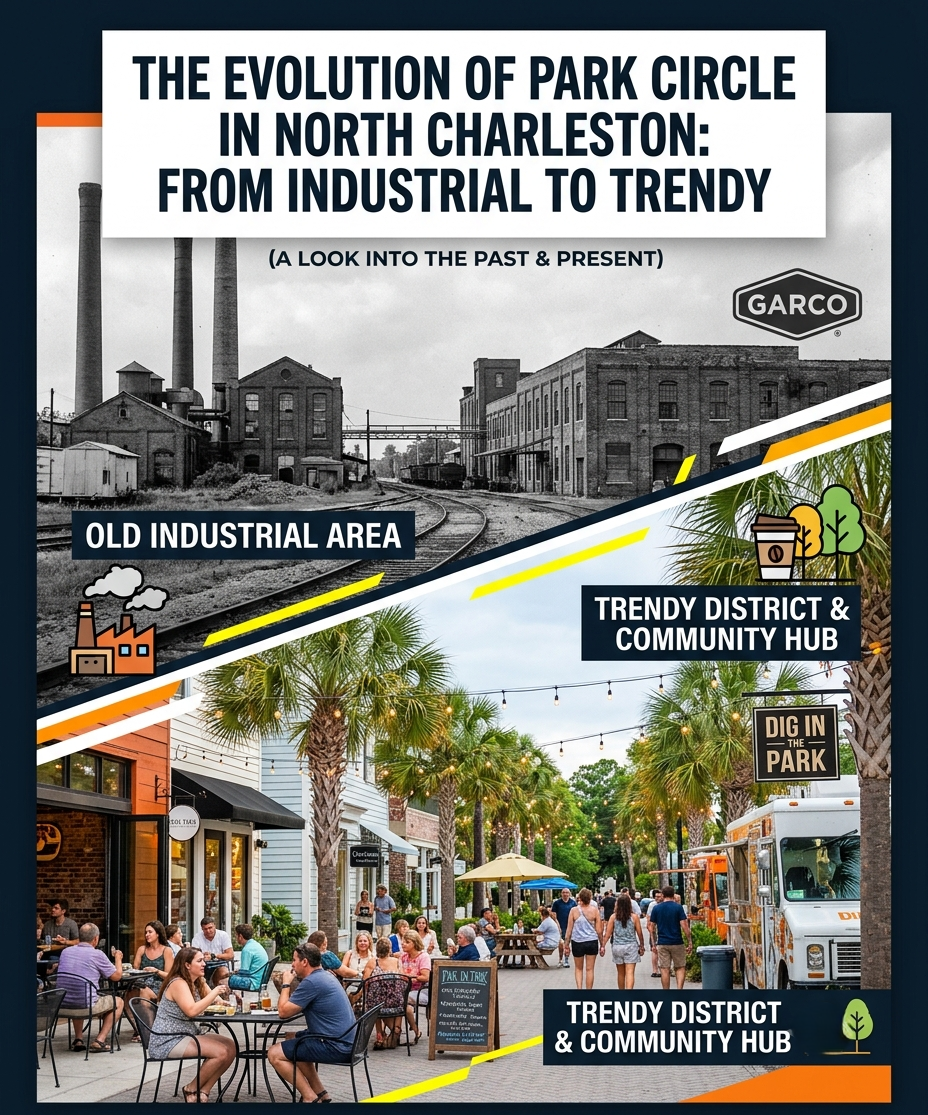
The Evolution of Park Circle in North Charleston: From Industrial to Trendy

Few neighborhoods in the Charleston region have transformed as dramatically over the past two decades as Park Circle in North Charleston. Once known primarily for its industrial past and proximity to the old Charleston Navy Base, today's Park Circle is a vibrant, walkable, design-forward community packed with breweries, restaurants, parks, and locally owned small businesses. The neighborhood's transformation is one of the most compelling stories in modern North Charleston real estate, and it continues to attract buyers from across the region and around the country.

The Origins of Park Circle

Park Circle was originally designed in the early 1900s as a planned residential community organized around a central park. The layout, with its iconic circular street pattern and tree-lined avenues, was unusual for its time and still defines the neighborhood today. For decades, the area sat alongside the Charleston Navy Base and a broad industrial corridor that powered the local economy. When the Navy Base closed in the 1990s, North Charleston as a whole faced a difficult transition, and Park Circle was no exception.

The Turning Point

The combination of affordable housing stock, strong community ownership, and entrepreneurial energy started to change Park Circle in the 2000s. Young families and creative professionals began buying and renovating mid-century homes. Local restaurateurs took chances on opening in the area. Breweries arrived. Public investments in parks, sidewalks, and street improvements helped accelerate the transformation. Word of mouth did the rest.

The Park Circle of Today

A True Walkable Neighborhood

The central section of Park Circle is one of the most walkable mixed-use neighborhoods in the Charleston region. East Montague Avenue, the main drag, is dotted with restaurants, breweries, coffee shops, and small businesses. Residents in the surrounding streets walk to dinner, drop kids at the playground, and bike to the brewery on weekends. Many describe the lifestyle as small-town in feel even though it sits within one of the Charleston metro's largest cities.

The Brewery and Restaurant Scene

Park Circle has become a destination for food and drink. Holy City Brewing, Commonhouse Aleworks, Cooper River Brewing, and other local taprooms anchor a strong craft beer culture. Local restaurants offer everything from elevated Southern fare to wood-fired pizza, pho, tacos, and barbecue. The dining scene continues to evolve as new concepts open and the neighborhood's reputation spreads.

Parks and Public Spaces

The central Park Circle park itself is one of the largest public greens in the region. Riverfront Park, located within North Charleston near the former Navy Base, hosts major outdoor concerts including the High Water Festival. The combination of community parks, performance venues, and walking infrastructure gives residents a quality of public space that is hard to match.

Real Estate Patterns in Park Circle

The Mid-Century Bungalow and Cottage Stock

Much of Park Circle's housing stock dates from the 1940s through 1960s, with bungalows, cottages, and modest single-family homes throughout the neighborhood. These homes have become some of the most sought-after entry points into the Charleston region for buyers who want character without paying downtown prices.

The Evolution of Park Circle in North Charleston From Industrial to Trendy

Renovation Activity

Renovated bungalows often see significant appreciation, especially when updates preserve the original character. Buyers value architectural integrity alongside modern systems, and the best renovations balance the two carefully.

New Construction and Infill

Newer infill construction has also expanded the housing options. Modern townhomes, custom homes on infill lots, and small new-construction developments add inventory and diversity to the price range.

Who Is Moving to Park Circle

Young Professionals

Young professionals attracted to the walkability, the food scene, and the value relative to in-town Charleston continue to drive demand. Many work in tech, healthcare, manufacturing, or creative industries throughout the metro.

Families

Families value the central park, the schools, and the strong community feel. Park Circle has become an unexpectedly strong family neighborhood thanks to its walkable design and abundant green space.

Creatives and Entrepreneurs

Artists, designers, restaurateurs, and small business owners have shaped the neighborhood's character. Many live and work in the neighborhood and contribute to the local culture.

Out-of-State Buyers

National media attention has brought a steady stream of out-of-state buyers attracted by Park Circle's combination of charm, affordability relative to other Charleston neighborhoods, and lifestyle.

How Park Circle Compares to Other Charleston Neighborhoods

Vs. Avondale in West Ashley

Both neighborhoods feature mid-century homes and walkable urban-village feels. Park Circle delivers more breweries and a larger central park, while West Ashley's Avondale offers easier access to downtown Charleston.

Vs. Downtown Charleston

Downtown delivers walkable historic urban living at a premium price. Park Circle delivers walkable, community-focused living at significantly more attainable values, though without the historic-district aesthetic.

Vs. James Island Riverland Terrace

Riverland Terrace on James Island offers similar walkable charm with a more island vibe. Park Circle's brewery and restaurant density is larger, but Riverland Terrace gives you marsh, boat ramp access, and a quieter pace.

What to Consider Before Buying

Renovation Quality

Many Park Circle homes have been renovated over the past decade, but renovation quality varies widely. A thorough inspection and review of permit history is important.

Flood Zone Considerations

Parts of North Charleston sit in or near flood zones. Confirm the specific flood zone for any property and review insurance options early.

Commute Patterns

Park Circle offers reasonable commutes to downtown Charleston, Boeing, the airport, and other major employment hubs. Commute times depend on the destination but generally remain manageable.

Continued Evolution

Park Circle is still evolving. Some streets remain in transition, with mixed renovated and unrenovated properties. The right Realtor can help you understand the trajectory of specific blocks and how that affects long-term value.

Strategy for Buyers and Sellers

For buyers, Park Circle continues to offer one of the most distinctive lifestyle and value combinations in the Charleston region. The key is selecting the right block and house at the right price point, ideally with a Realtor who knows the neighborhood block by block. For sellers, the recipe for strong results includes thoughtful preparation, accurate pricing, and marketing that emphasizes the lifestyle and walkability that define the neighborhood. Park Circle buyers are paying for a vibe as much as a structure, and the listing should reflect that.

Key Takeaways

Park Circle's transformation from industrial-adjacent to walkable, design-forward neighborhood is one of the most compelling stories in modern Charleston real estate. With a strong food and drink scene, abundant green space, a unique street layout, and a diverse community of professionals, families, and creatives, the neighborhood continues to attract demand from across the region and the country. For buyers who want walkable urban-village living at a more attainable price, Park Circle remains one of the most rewarding addresses in the entire Charleston metro. The next chapter of the neighborhood's evolution is still being written, and savvy buyers and sellers can both benefit from understanding where it is headed.

Posted in Lifestyle