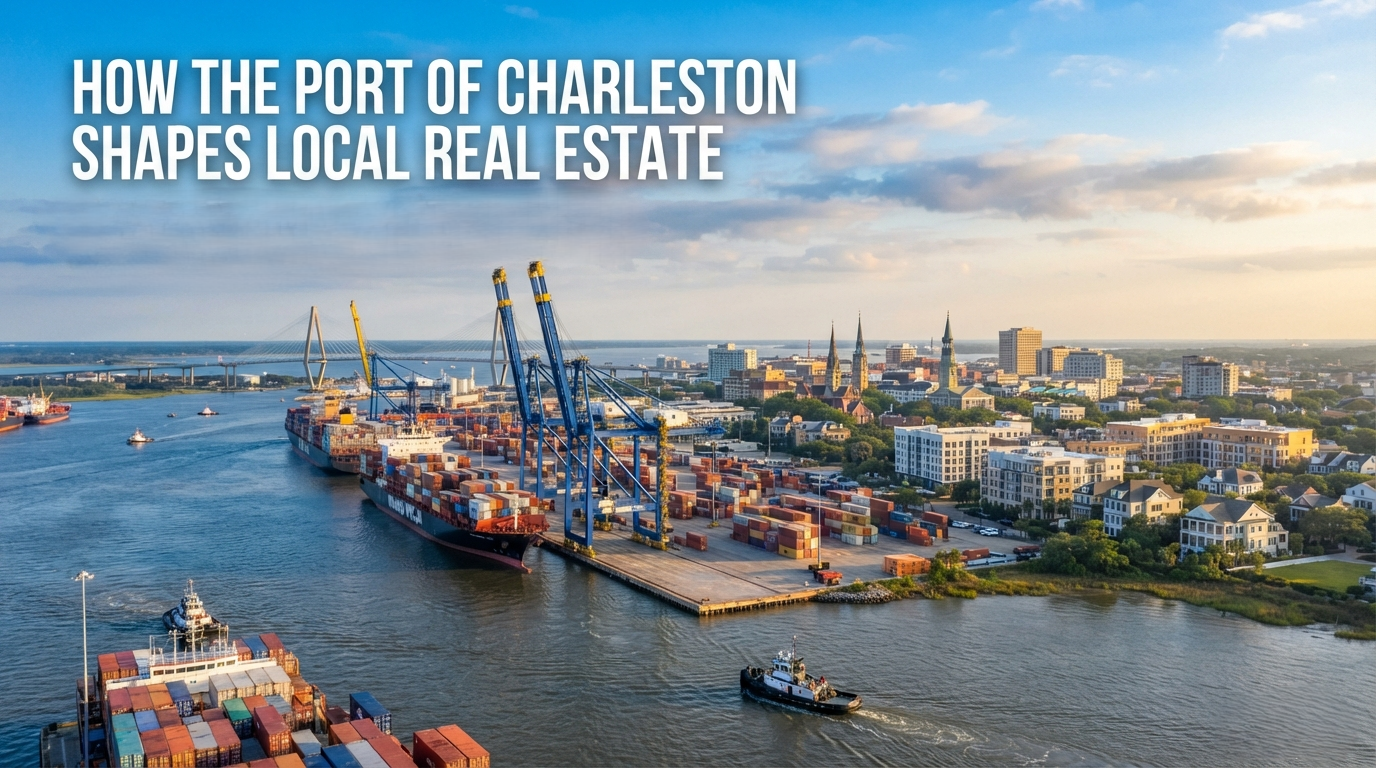
Most buyers moving to Charleston never think about the port. They should. Because the Port of Charleston is one of the biggest forces shaping what happens in local real estate. It drives jobs. It drives population growth. It drives which neighborhoods appreciate and which get overlooked. And when the port expands, ripples move through the entire metro market.
I've been selling coastal Carolina real estate for over 20 years. If you're trying to understand where Charleston values are headed, the port belongs on your radar.
What the Port Actually Does for the Local Economy
The Port of Charleston is one of the top ten container ports in the country. It handles cargo moving between Southeastern manufacturers and the world. That's what draws companies like BMW upstate, Volvo in Berkeley County, Boeing in North Charleston, and Mercedes-Benz Vans out in Ladson. Those companies pick locations based on port access.
Every one of those companies employs thousands of people. Those people buy houses. Those houses drive the local real estate market.
How Port Expansion Moves the Market
The South Carolina Ports Authority has been investing heavily in port capacity. Hugh K. Leatherman Terminal in North Charleston, harbor deepening to handle bigger ships, upgraded rail and truck connections. Every one of those projects creates jobs and shifts where growth pressure lands next.
Here's what I mean. When rail capacity expanded, industrial real estate values in the areas along the freight corridors climbed. When Leatherman Terminal opened, residential demand in North Charleston and Hanahan got another push. Areas that were considered secondary five years ago started competing head-to-head with more established neighborhoods.
Neighborhoods That Track With Port Growth
North Charleston
North Charleston sits at the operational heart of the port and the industrial corridor around it. Neighborhoods like Park Circle have transformed over the last decade, driven partly by port-related jobs bringing new residents. Communities like Coosaw Creek and Indigo Palms serve professionals working in port-related industries.
Hanahan
Hanahan is close to Joint Base Charleston's Naval Weapons Station side and the port's inland connections. Communities like Tanner Plantation and Dominion Village attract port workers, military families, and professionals wanting shorter commutes to industrial employment.
Goose Creek and the Berkeley Corridor
Goose Creek and the broader Berkeley County corridor have absorbed a lot of Volvo and port-related growth. Communities like Crowfield Plantation continue to see steady demand tied to nearby employment.
Summerville
Summerville catches port-adjacent growth further out. Boeing's proximity to Summerville and easy I-26 access to port operations mean master-planned communities here have absorbed a meaningful share of the workforce that supports port and port-related industries.
What Port Growth Means for Buyers
Job Security in Port-Adjacent Industries
If you work in port operations, logistics, manufacturing, or related industries, choosing a neighborhood that keeps you within a reasonable commute of the port and inland industrial parks makes long-term sense. Commute time affects daily quality of life more than most buyers admit.
Appreciation Potential
Neighborhoods along growing employment corridors tend to appreciate faster than isolated pockets. Buying in Hanahan or growth-corridor Summerville often means catching that appreciation curve.
Rental Demand
Investors targeting long-term rental should look at port-adjacent neighborhoods with a critical eye. Steady employment demand from port-related industries typically supports strong rental fundamentals.
What Port Growth Means for Sellers
Timing Matters
Port expansion announcements often move markets in the specific neighborhoods most affected. If you're sitting on a home in North Charleston or the Berkeley corridor, keep an eye on what the Ports Authority announces. Timing your listing to catch positive news can move your net.
Buyer Pool Composition
Your buyer pool in port-adjacent neighborhoods often includes relocating professionals from other port cities. They know what to look for. Position your home for buyers who understand industrial employment and its lifestyle rhythm.
The Trade-Offs You Need to Understand
Port growth isn't only positive. Truck traffic on I-526, freight rail activity, and occasional industrial noise are all part of port-adjacent life. Buyers who don't understand this ahead of time end up disappointed. Buyers who go in with clear eyes can find real value in neighborhoods overlooked by people who wouldn't tolerate the trade-offs.
Some pockets right next to the industrial corridor may have air quality, noise, or truck traffic concerns worth researching. This is where working with a local Realtor who knows block-by-block matters more than just a general area.
What I Watch Going Forward
Continued port expansion means continued job creation. Continued job creation means continued housing demand. That demand shows up in specific neighborhoods before it shows up in general market data. Buyers and investors paying attention can catch appreciation early. Sellers can time exits to catch peak demand.
The Charleston market gets a lot of attention for its downtown historic district and its beach communities. But if you want to understand where the growth engine actually is, look at the port.
Key Takeaways
The Port of Charleston is one of the top ten container ports in the country and one of the biggest forces in the local real estate market. Port expansion drives job creation, which drives demand in North Charleston, Hanahan, Goose Creek, and Summerville. Buyers can catch appreciation by shopping port-adjacent neighborhoods with clear eyes about the trade-offs. Sellers in those areas can time listings to catch positive port announcements. And investors targeting long-term rental should focus on neighborhoods where port-related employment supports the fundamentals.