The Charleston real estate market has run hot for a long stretch, and sellers got used to what a hot market feels like. Multiple offers. Above-asking prices. Buyers waiving inspections just to compete. That's not how markets always behave. When conditions soften — higher rates, more inventory, cautious buyers — sellers who don't adjust get left sitting.
Here's what I mean. In over 20 years selling coastal Carolina real estate, I've watched sellers do beautifully in soft markets and I've watched sellers stall. The difference isn't luck. It's strategy. Here's how to sell your Charleston home when the market isn't doing all the work for you.
Accept What a Slower Market Actually Is
A slower market isn't a bad market. It's a normalized market. Homes take longer to sell. Buyers negotiate more. Pricing accuracy matters more. Marketing matters more. Preparation matters more. Every step you might have gotten away with cutting corners on when the market was hot now costs you real money.
Sellers who understand this and adjust win. Sellers who cling to peak-market expectations lose.
Price It Right From Day One
Here's what nobody wants to hear. In a slower market, overpricing kills your listing faster and more permanently than at any other time. Buyers with more inventory to choose from skip overpriced listings. Days on market pile up. When you eventually reduce, buyers assume something's wrong with the home.
Ask your Realtor for a hard, honest comparative analysis. Not what you want. Not what you paid. Not what your neighbor claims theirs is worth. What comparable homes have actually closed for in the last 60 to 90 days. Price at market or slightly under. Homes priced right in slower markets often still see strong buyer response.
Get Inspection-Ready Before You List
In a slower market, buyers push back on inspection findings harder. Their leverage is higher. Every real issue becomes a negotiating chip.
Get a pre-listing home inspection and CL-100 termite inspection. Address the issues you can fix. Price appropriately for the ones you can't or won't. When a buyer's inspector finds those same items, you've already accounted for them and can hold the line on price.
Prep the Home Like It's a Competition
Because it is. Deep clean top to bottom. Fresh paint on high-traffic walls. Refresh landscaping. Update dated lighting fixtures. Fix every small issue. Consider a professional stager. In slower markets, buyer expectations rise even when demand falls. Buyers can afford to be picky.
Homes that show like they just came out of a magazine sell in almost any market. Homes that show tired sit even in strong markets.
 Invest in Professional Marketing
Slower markets punish weak marketing. Professional photography isn't optional. Neither is drone footage, video walk-throughs, and quality staging for photo day.
Your listing has to grab attention in the first three seconds of scrolling on Zillow or Realtor.com. That's determined entirely by the first photo. If your listing photos look like they were taken on someone's phone in bad light, you're already losing to competitors.
Be Flexible With Showings
Fewer buyers means you can't afford to lose any who want to see the home. Two-hour notice. Weekday evening showings. Weekend availability. Whatever your household can handle, err on the side of more availability. Buyers who can't see the home when they want will simply see a competitor's home instead.
Offer Real Buyer Incentives
Higher interest rates change what buyers can afford. Sellers who help solve that problem win more offers.
Rate Buydowns
Offering to fund a permanent rate buydown or a temporary 2-1 buydown can meaningfully improve the buyer's monthly payment. Sometimes worth more to buyers than a comparable price reduction.
Closing Cost Credits
Contributing to buyer closing costs can help buyers who have down payment but limited cash cushion.
Home Warranty
A prepaid home warranty gives buyers peace of mind and costs sellers relatively little.
Repair Credits
Offering a small credit toward known issues signals transparency and reduces post-inspection negotiations.
Consider Your Contingency Approach
Some sellers in slower markets accept offers with contingencies they'd have rejected in stronger markets. Home-sale contingencies, longer inspection windows, more flexible closing dates. These aren't automatically bad — they can be what makes a good buyer viable.
Marketing Channels That Actually Move Homes
MLS and the Major Portals
Still the foundation. Zillow, Realtor.com, and MLS syndication have to be first-class. Your listing has to look great on every one.
Social Media Video
Reels, TikTok, and YouTube shorts are increasingly where buyers first see homes. Realtors who market with quality short-form video reach buyers who never opened Zillow.
Broker Networks
Especially at higher price points, private broker networks and cross-market referrals matter. A well-connected Realtor moves your listing in ways that don't show up on public sites.
Open Houses
Not dead. Strategic open houses in the right week can drive real traffic and offers, especially in family-friendly neighborhoods like Park West or Cane Bay Plantation.
Neighborhood-Specific Considerations
Downtown and Old Village
Historic homes in historic Charleston and Old Village generally hold value better in slower markets because inventory is genuinely limited. Even so, pricing and presentation matter.
Master-Planned Suburban Communities
Sellers in Nexton, Cane Bay Plantation, and similar communities face active new construction competition. Builders offer incentives resale sellers have to counter. Position your home's advantages — mature landscaping, upgrades over builder standard, immediate move-in — clearly in marketing.
Beach Communities
Slower markets often show up first in second-home and investment segments. Folly Beach, Isle of Palms, and similar communities benefit from investor-friendly marketing that emphasizes rental income potential and cash-on-cash returns.
Newer Suburban Growth Areas
Sellers in growth areas like Hanahan, newer West Ashley, and outer Berkeley County need to differentiate against nearby new construction with condition, presentation, and pricing.
What Not to Do
Don't Chase the Market Down
The worst strategy in a slower market is pricing high, waiting, reducing a little, waiting, reducing again, and again. Each reduction signals weakness. Better to price right the first time or make one meaningful reduction rather than three small ones.
Don't Fire Your Agent Too Fast
Sometimes changing agents helps. Often it doesn't. Before switching, evaluate honestly whether the underlying issue is agent execution or seller decisions on price, prep, and flexibility.
Don't Ignore Feedback
Buyer feedback after showings is data. When multiple buyers cite the same issue, believe them. When multiple buyers walk without an offer, the pricing or presentation isn't matching what the market values.
When to Consider Pulling and Relisting Later
Sometimes the right call is to withdraw the listing, address issues, and relaunch fresh when conditions or preparation align better. This isn't giving up — it's tactical. Talk with your Realtor about whether that makes sense in your specific situation.
Key Takeaways
Selling a Charleston home in a slower market isn't harder — it's different. Price accurately from day one. Prep like it's a competition, because it is. Invest in real marketing. Be flexible with showings and thoughtful with buyer incentives. Position against your specific neighborhood's dynamics. And work with a Realtor who's earned their reputation in every kind of market, not just the easy ones. Done right, sellers absolutely close good deals in slower markets. It just takes more preparation and more strategy than the hot years required.
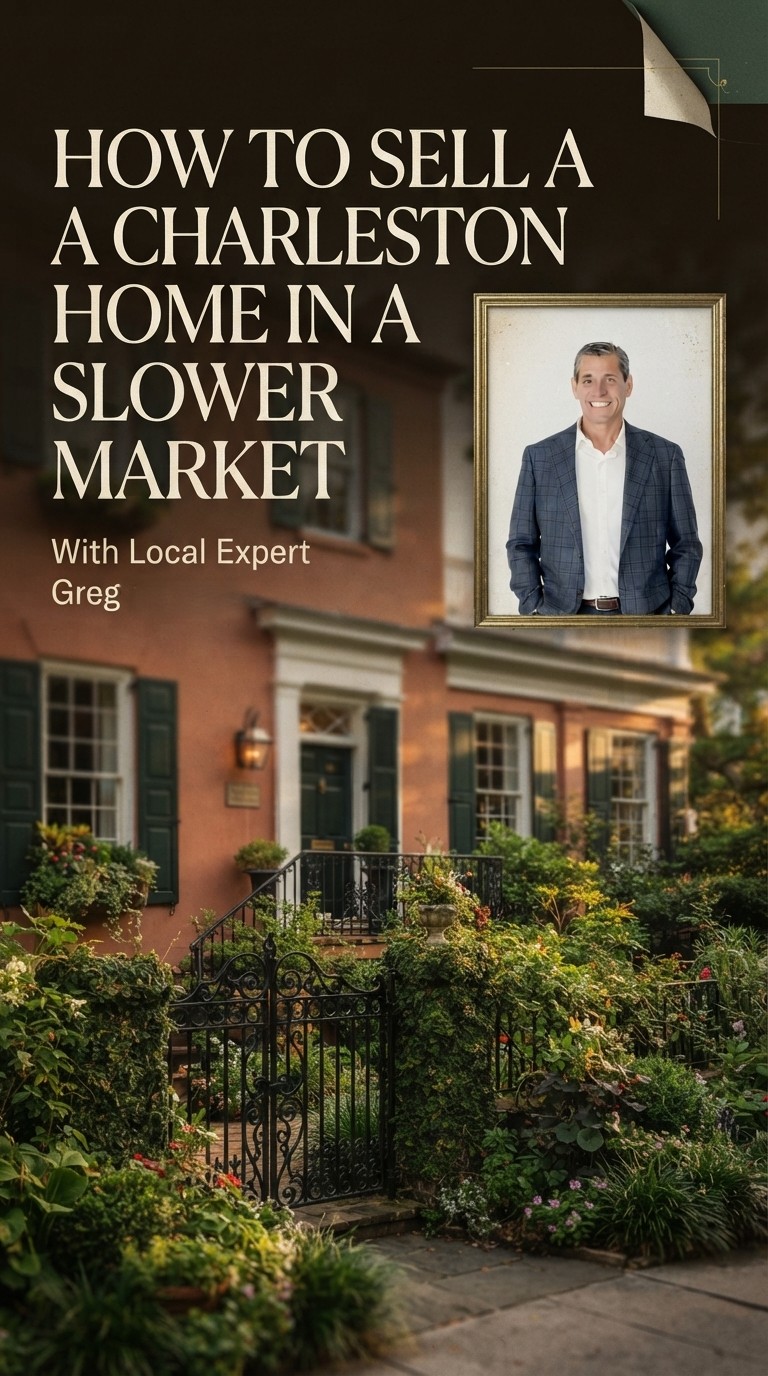
About Greg Harrelson
Greg Harrelson is Broker/Owner of Century 21 The Harrelson Group and owner of Century 21 Expert Advisor in the Charleston market. Over 20 years and 15,000+ closed and partnered transactions across many market cycles, Greg has helped sellers win in every kind of market — hot, slow, and everything in between. His team of roughly 500 agents serves the Grand Strand and Charleston markets.