If you own a home anywhere near the Charleston coast, your landscape is fighting a war with salt air whether you know it or not. Wind carries salt inland for miles. It burns leaves. Corrodes irrigation. Kills plants that would thrive fifty miles inland. And it takes about one bad summer to figure out you picked the wrong shrubs.
Here's what I mean. In over 20 years watching Charleston homeowners tend to their yards, the ones with beautiful, low-maintenance landscapes have almost all made the same handful of choices. Here's what actually works when you're gardening in Lowcountry salt air.
Why Salt Air Is Hard on Plants
Salt draws moisture out of leaves through a process called desiccation. It burns tender growth. It builds up in soil and disrupts nutrient uptake. In heavy exposure areas — anything within a mile or so of open ocean or marsh — salt tolerance becomes the number one factor in whether a plant survives past its first summer.
Even inland Charleston yards get some salt exposure. Storms drive salt further inland than most people realize.
Salt-Tolerant Trees That Actually Thrive
Live Oak
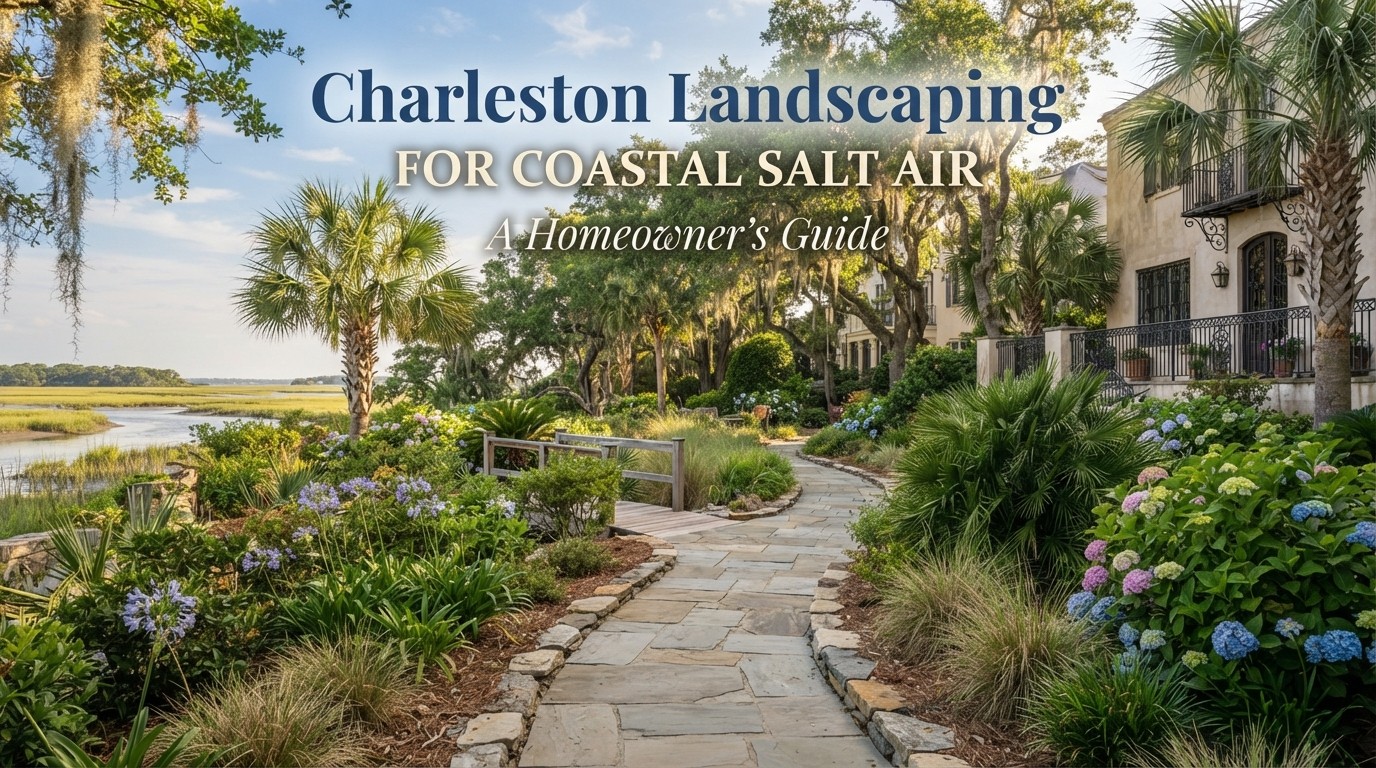
The gold standard. Native, salt-tolerant, and part of what makes the Lowcountry look like the Lowcountry. Slow-growing but essentially bulletproof once established.
Sabal Palmetto
South Carolina's state tree for good reason. Handles salt spray, hurricane winds, and drought better than almost any other tree you can plant here.
Southern Magnolia
Big glossy leaves that resist salt burn. Iconic and beautiful. Just give it space — magnolias get big.
Southern Red Cedar
Underappreciated. Handles salt, drought, and coastal conditions gracefully. Good screening tree for larger lots.
Wax Myrtle
Fast-growing, salt-tolerant evergreen. Great for privacy screens. Native, wildlife-friendly.
Salt-Tolerant Shrubs That Perform
Yaupon Holly
Native, salt-tolerant, evergreen, and shapes well into hedges. One of the most versatile Lowcountry shrubs.
Wax Myrtle (Again as Shrub)
Grown as a shrub or small tree, wax myrtle earns its spot in almost every well-planned coastal yard.
Oleander
Salt tolerant, blooms all summer, handles heat. Note: toxic to pets and kids if ingested — plant thoughtfully.
Beach Rose
Handles direct salt spray. Great for immediate beachfront lots on Folly Beach, Isle of Palms, or Sullivan's Island.
Pittosporum
Salt tolerant, deer resistant, drought tolerant. Popular in coastal Charleston landscapes for good reason.
Ground Covers and Perennials
Muhly Grass
Native ornamental grass with stunning pink blooms in fall. Handles salt and looks incredible en masse.
Beach Sunflower
Low-growing, salt tolerant, cheerful yellow blooms. Great for beachfront lots and beds.
Liriope
Extremely tough evergreen ground cover. Handles salt, shade, and neglect.
Blanket Flower
Sun-loving, salt tolerant, blooms much of the year. Native to coastal areas.
Perennial Peanut
Excellent low-growing ground cover for sunny coastal spots. Salt tolerant and low water needs.
Plants to Avoid in Coastal Charleston
Some popular landscape plants just won't work near the coast. Common mistakes include Japanese maples in exposed locations, hydrangeas in salt-affected spots, boxwoods in high-salt exposure, tender annuals planted too close to open water, and non-native azaleas in sandy salt-affected soils.
These can work in protected inland spots but suffer in real coastal exposure.
Design Considerations for Salt Air Landscapes
Use Natural Windbreaks
Plant your salt-tolerant heroes on the windward side. Less salt-tolerant plants can then live protected in the sheltered zones behind them. Wax myrtles and yaupon hollies make great buffer plantings.
Group by Water Needs
Efficient irrigation depends on grouping plants with similar water needs. Salt tolerant plants tend to also be drought tolerant. Group them together and water less.
Layer Heights
Live oaks and palmettos for canopy. Wax myrtles and yaupons for mid-height structure. Muhly grass and beach sunflower for ground layer. Layered landscapes handle wind and salt better than flat ones.
Mulch Matters
Mulch conserves moisture, moderates soil temperature, and slows salt buildup. Pine bark and hardwood mulches work well in Charleston conditions.
Irrigation and Soil Considerations
Rinse Salt Off Regularly
After major storms, rinse plants with fresh water to remove accumulated salt. This one step saves plants that would otherwise burn.
Improve Sandy Soil
Coastal soils are often sandy and low-organic. Amending planting beds with compost, aged pine bark, and quality topsoil dramatically improves plant survival.
Manage Irrigation Carefully
Overwatering in Charleston's humidity encourages root rot and disease. Water deeply and less often rather than shallowly and daily. Established salt-tolerant plants often need very little supplemental irrigation.
Landscape Priorities by Location
Beachfront and Barrier Island Homes
Full salt exposure. Stick to the toughest choices — palmettos, wax myrtle, beach rose, muhly grass, beach sunflower, oleander. Skip anything questionable.
Marsh-Front Homes
High humidity, wind-driven salt, and occasional flooding. Similar plant palette to beachfront with some flexibility for less-exposed areas of the yard.
Inland Suburban Homes
Homes in communities like Cane Bay Plantation, Park West, or newer West Ashley subdivisions get some salt exposure during storms but generally have more planting flexibility. Native and salt-tolerant plants still perform best long-term.
Historic Downtown
Historic garden traditions in historic Charleston include specific plant palettes appropriate to Lowcountry gardens. Design review may apply in the historic district. Consider working with a designer familiar with historic garden traditions.
Timing Your Planting
Fall is generally the best planting season in the Charleston area. Cooler temperatures reduce transplant stress. Plants get a full winter to establish roots before the brutal summer heat arrives. Spring planting works for many species but requires more attentive watering through the first summer.
What to Do After Storms
After hurricanes or major storms, salt burn shows up within a few days on affected plants. Rinse the entire landscape with fresh water to reduce salt residue. Assess damage after a couple of weeks — many plants recover from what looks like severe burn if the root system survives. Don't rush to remove plants that look terrible in the first week after a storm.
Working With Local Landscapers
Charleston has strong local landscape design and installation businesses that understand salt air conditions. Look for designers with specific Lowcountry experience. Ask to see completed projects on similar coastal lots. Native plant nurseries in the area are also excellent resources for plant selection.
Key Takeaways
- - Salt air is the defining challenge for Charleston-area landscapes, especially within a mile of open water or marsh
- - Live oak, palmetto, magnolia, wax myrtle, yaupon holly, and pittosporum are proven salt-tolerant workhorses
- - Skip Japanese maples, hydrangeas, and boxwoods in exposed coastal locations
- - Use salt-tolerant plants as windbreaks to protect more sensitive plants in sheltered zones
- - Amend sandy coastal soil with compost and quality topsoil to improve plant survival
- - Rinse landscape with fresh water after major storms to remove accumulated salt
- - Fall planting typically gives new landscapes the best chance to establish before summer heat