Charleston's warm, humid climate makes life beautiful, but it makes homes work harder. Humidity is the single biggest force behind moisture-related issues in Lowcountry homes, from mold and mildew to wood rot, HVAC strain, and even health impacts. The good news is that with the right strategies, Charleston homeowners can keep their homes dry, healthy, and durable for the long term. This guide walks through practical prevention approaches for anyone owning Charleston, SC real estate.
Why Humidity Is Different in the Lowcountry
Coastal South Carolina averages high relative humidity for much of the year, with summer months routinely exceeding 80 percent. Combined with warm temperatures, this creates ideal conditions for mold, mildew, and moisture-related damage. Even brief periods of poor ventilation, HVAC problems, or unaddressed leaks can lead to real issues.
The Health and Home Costs of Moisture
Uncontrolled humidity can cause visible mold, hidden mold behind walls or in crawl spaces, wood rot in structural components, damaged flooring and drywall, poor air quality, and respiratory health issues. Repair costs for serious moisture damage can reach tens of thousands of dollars, making prevention dramatically more cost-effective than remediation.
Keep Indoor Humidity Under Control
Target Range
Aim to keep indoor humidity between 30 and 50 percent year-round. Below 30 percent gets uncomfortable in winter. Above 50 percent creates conditions favorable for mold growth.
Use a Hygrometer
Inexpensive hygrometers let you monitor humidity throughout the home. Keep one in the main living area and one in problem spots like basements, sunrooms, or crawl spaces.
Run Your HVAC Regularly
HVAC systems dehumidify as part of normal cooling operation. During humid seasons, avoid opening windows for extended periods, which lets moist air in. Keep the HVAC running consistently.
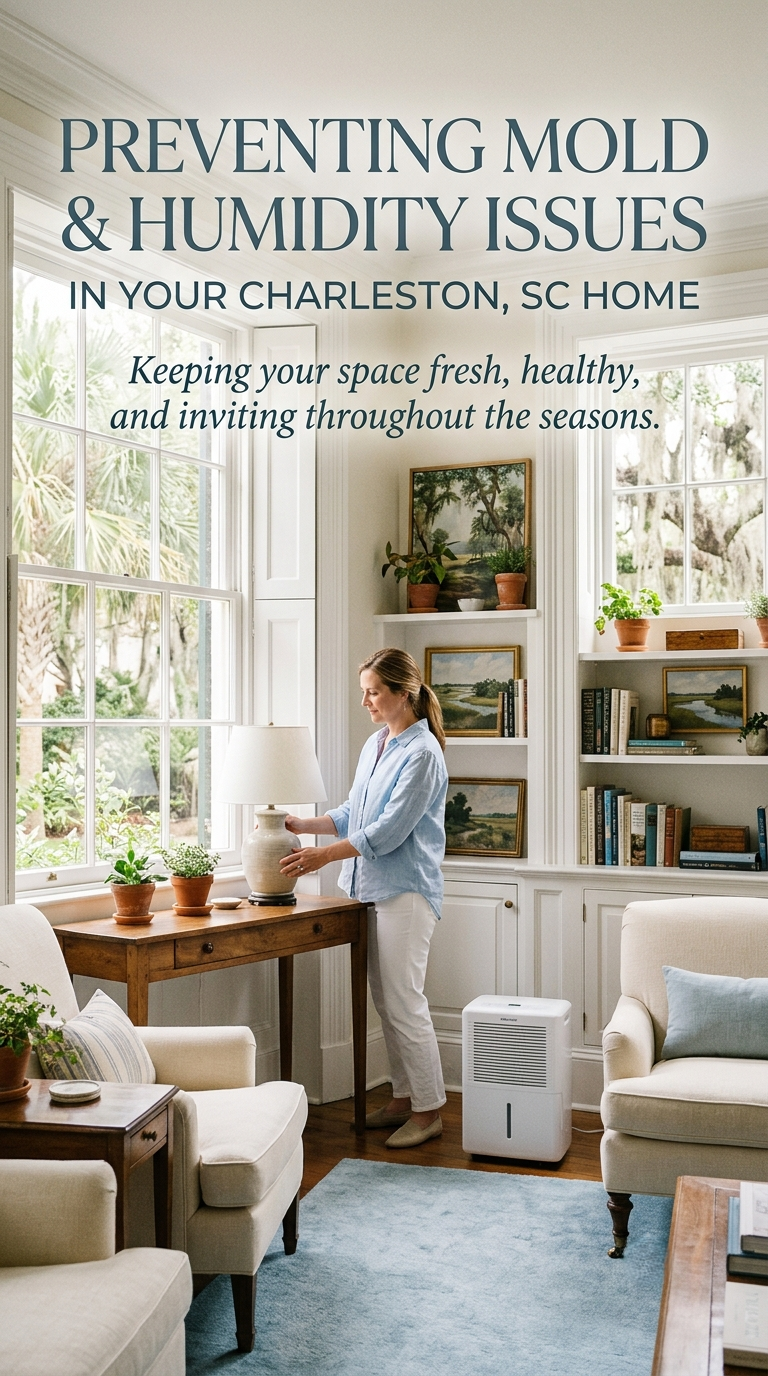
Consider a Whole-House Dehumidifier
For homes that struggle with humidity despite normal HVAC operation, a whole-house dehumidifier tied into the ductwork can be a game-changer. Especially valuable in homes with crawl spaces or older construction.
Address Crawl Space Moisture
Vapor Barriers
Every Charleston-area crawl space should have a proper vapor barrier covering the ground. This blocks ground moisture from migrating into the space.
Ventilation vs. Encapsulation
Traditional crawl spaces rely on ventilation. Modern best practice for the Lowcountry often involves full encapsulation with a sealed vapor barrier, dehumidifier, and proper drainage. Talk with a local specialist about which approach fits your home.
Grading and Drainage
Ensure the yard slopes away from the foundation. Address any standing water near the home. Keep gutters clear and downspouts extending well away from the foundation.
Regular Inspections
Have your crawl space inspected annually. Catching moisture issues early is dramatically cheaper than addressing them after damage occurs.
Attic and Roof Considerations
Proper Attic Ventilation
Ridge vents, soffit vents, and gable vents work together to keep attic air moving and moisture out.
Roof Leaks
Even small roof leaks quickly create moisture issues in Charleston's climate. Inspect the roof annually and after major storms.
Insulation
Proper attic insulation keeps warm humid air from condensing on cool surfaces. Combined with ventilation, it protects the entire home.
Bathroom and Kitchen Prevention
Exhaust Fans
Use bathroom exhaust fans during and for 15 to 30 minutes after every shower. Ensure kitchen range hoods vent to the exterior, not just into the room.
Grout and Caulk Maintenance
Inspect and repair grout, caulk, and sealants around tubs, showers, sinks, and windows. Small failures let significant moisture through over time.
Under-Sink Areas
Regularly inspect under sinks for leaks or moisture. Address plumbing issues immediately.
Windows, Doors, and Exterior Sealing
Weather-Stripping
Well-sealed windows and doors prevent humid outdoor air from infiltrating and cool indoor air from escaping.
Exterior Caulking
Inspect and refresh caulking around windows, doors, and any exterior penetrations regularly.
Storm Damage Repairs
After any major storm, inspect siding, windows, roofing, and doors for damage. Address issues immediately to prevent moisture intrusion.
HVAC Maintenance
Regular Service
Have your HVAC system serviced at least once a year, ideally twice. Local Lowcountry conditions are hard on systems.
Change Filters
Change filters monthly during heavy use seasons. Clogged filters reduce dehumidification performance.
Check Drain Lines
Clogged HVAC drain lines can cause overflow and water damage. Ensure your system's condensate drain is clear.
Proper Sizing
An oversized HVAC system actually dehumidifies poorly, because it cycles off before removing enough moisture. If your home has humidity issues despite service, a Manual J load calculation can identify sizing problems.
Landscaping and Yard Considerations
Keep Vegetation Off the House
Trim shrubs and vines away from siding. Vegetation touching the house traps moisture and creates ideal conditions for mold and pest issues.
Yard Drainage
French drains, swales, and other drainage solutions can address chronic yard moisture that eventually affects the home.
Mulch and Beds
Keep mulch and planting beds a few inches away from the foundation. Excess mulch against the house holds moisture and encourages termites.
What to Do If You Suspect Mold
If you notice musty smells, visible mold, or unexplained health symptoms, address the issue promptly. Small surface mold on non-porous surfaces can often be cleaned with soap and water or a bleach solution. Larger issues, mold on porous materials, or hidden mold behind walls typically requires professional remediation. Do not paint over mold. Do not ignore it. Small problems become expensive problems quickly in the Lowcountry.
Special Considerations by Neighborhood
Coastal and Waterfront Homes
Homes in Folly Beach, Isle of Palms, and other coastal areas deal with additional salt air and higher humidity exposure. Prevention becomes even more important.
Historic Homes
Historic homes in historic Charleston often have unique moisture considerations related to older construction methods. Work with contractors who specialize in historic properties.
Older Suburban Homes
Ranch homes in older parts of West Ashley or James Island often benefit significantly from HVAC upgrades and crawl space encapsulation.
Newer Master-Planned Homes
Newer construction in communities like Cane Bay Plantation generally has stronger moisture management from the start, but still benefits from consistent maintenance.
Strategy for Charleston Homeowners
Treat moisture prevention as ongoing maintenance, not a one-time project. Build inspections, HVAC service, and small-scale maintenance into your annual routine. Address any issues immediately rather than waiting. And work with local contractors and specialists who understand Lowcountry moisture challenges.
Key Takeaways
Preventing moisture and mold issues in a Charleston home is entirely doable with the right approach. Keep indoor humidity between 30 and 50 percent, maintain your HVAC and crawl space, address roof and window issues promptly, and stay ahead of small maintenance items before they become expensive problems. The Lowcountry climate is beautiful, but it demands respect from homeowners. Those who invest in prevention protect both their home and their family's health for the long term.
Frequently Asked Questions
What is the ideal humidity level for a Charleston home?
Aim to keep indoor humidity between 30 and 50 percent year-round for the best balance of comfort, mold prevention, and structural protection.
Do I need a dehumidifier if I have central air conditioning?
Central air provides some dehumidification, but homes with chronic humidity issues often benefit from whole-house dehumidifiers integrated into the ductwork.
Should I encapsulate my crawl space?
For many Charleston-area homes, yes. Encapsulation with a sealed vapor barrier and dehumidifier is often superior to traditional venting in this climate. Consult a local specialist to evaluate your specific home.
How often should I inspect for moisture issues?
At least annually, and after any major storm. Crawl spaces, roofs, and any high-risk areas should get regular attention.
Is mold common in Charleston homes?
Yes, if moisture is not controlled. But mold is entirely preventable with good HVAC, ventilation, sealing, and maintenance practices.
About Greg Harrelson
Greg Harrelson is a seasoned Realtor® with more than 30 years of experience serving the Carolina markets. As the founder of Century 21 The Harrelson Group, Greg has built his career helping buyers, sellers, and investors achieve success in every corner of the coastal Carolina real estate market. His expertise spans residential homes, investment properties, land development, and coastal condos. Known for his deep local knowledge, innovative marketing strategies, and commitment to personal service, Greg consistently helps clients reach their real estate goals while navigating the ever-changing market with confidence and precision.