Charleston's winters are generally mild, but every few years the region gets hit with a hard freeze that catches homeowners off guard. Burst pipes, damaged landscaping, HVAC failures, and even significant property damage can result when Lowcountry homes are not prepared for the rare deep cold. The good news is that a small amount of preparation each fall can protect your home and save you significant repair costs. Here is what every Charleston homeowner should know about preparing for the occasional winter freeze. If you are new to Charleston, SC real estate, this is one of the most important seasonal maintenance topics to understand.
Why Freezes Cause Big Problems in Charleston
Coastal South Carolina homes are typically designed with mild winters in mind. Plumbing may run through unheated crawl spaces or exterior walls. Landscaping features tropical or subtropical plants that suffer in the cold. HVAC systems must strain during the coldest days. And homeowners often lack winter emergency supplies that are standard further north. When a real freeze hits, these small vulnerabilities become expensive problems.
Understand Charleston's Freeze History
Charleston typically sees only a few nights below freezing each year, but every few winters brings extended cold snaps with multiple consecutive nights in the 20s. Occasionally, the region experiences hard freezes with temperatures in the teens. The infrequency lulls homeowners into complacency, but that is exactly when hard freezes cause the most damage.
Protecting Your Pipes
Wrap Exposed Pipes
Wrap any exposed pipes, especially in crawl spaces and along exterior walls, with foam pipe insulation. This is one of the highest-value inexpensive preparations you can make.
Cover Exterior Faucets
Foam faucet covers protect exterior spigots from freezing. Keep hoses disconnected during cold snaps.
Let Faucets Drip
During hard freezes, let interior faucets drip slightly to keep water moving through pipes. Focus on faucets served by pipes in exterior walls or vulnerable areas.
Open Cabinet Doors
Open cabinet doors under sinks along exterior walls during freezes to let warm interior air reach the pipes.
Know Your Shut-Off Valve
Locate and label your main water shut-off valve now, before you need it in an emergency. If a pipe bursts, the ability to quickly shut off water minimizes damage.
Crawl Space Considerations
Close Crawl Space Vents
Close any operable crawl space vents during freezes to reduce cold air infiltration. Encapsulated crawl spaces are already sealed.
Insulate Pipes and Ductwork
Well-insulated crawl space pipes and ductwork resist freezing much better than exposed lines.
Address Any Foundation Gaps
Seal any openings in the foundation or crawl space that let cold air infiltrate.
Protecting Your HVAC
Change the Filter
A clean HVAC filter helps the system run efficiently during heavy heating demand.
Keep Vents Clear
Ensure supply and return vents are unblocked to allow proper airflow.
Consider Setting the Thermostat Higher
Do not turn heat off during freezes even if you leave the home. Keep it set at 55 to 60 degrees minimum to protect the home.
Have Backup Heat If Possible
Space heaters or a wood-burning fireplace can help during extended power outages, but use them safely per manufacturer instructions.
Protecting Your Landscape
Cover Vulnerable Plants
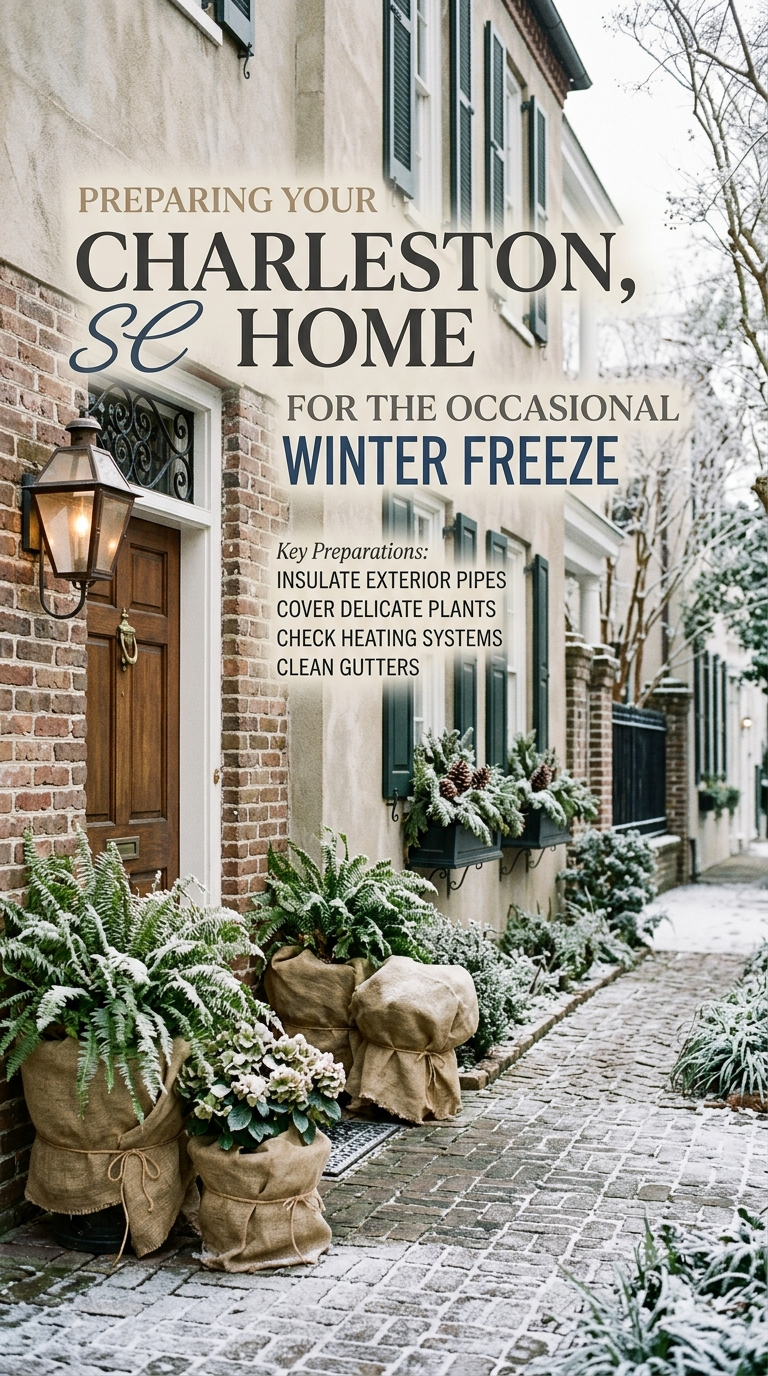
Palms, tender tropicals, and citrus should be covered with breathable cloth or frost blankets during hard freezes. Bring potted plants inside if possible.
Water Before the Freeze
Well-watered soil retains heat better than dry soil. Water plants and lawn thoroughly a day or two before an expected freeze.
Do Not Prune Damaged Plants Immediately
After a freeze damages plants, wait until spring to assess and prune. What looks dead may recover, and premature pruning can cause more damage.
Protect Fruit Trees
Wrap trunks and cover young trees to protect them from freeze damage.
Emergency Preparation
Backup Power
Freezes often come with winter storms that can cause power outages. Consider a portable generator or backup power option, and have batteries and flashlights ready.
Emergency Supplies
Bottled water, non-perishable food, extra blankets, and medications in case power outages last longer than expected.
Communication Plan
Charge phones and portable batteries before predicted storms. Know how to reach neighbors, family, and emergency services.
What to Do During a Freeze
Monitor Your Home
Check pipes, listen for unusual sounds, and address any small issues immediately before they become large ones.
Keep Everyone Safe
Prioritize household safety over property preservation. Space heaters, candles, and fireplaces all pose fire risks. Follow manufacturer instructions carefully.
Do Not Ignore the Roads
Southern drivers and southern infrastructure are not built for icy roads. Stay home during ice events unless truly necessary.
Recovery After a Freeze
Inspect for Damage
After the freeze passes, inspect the home for burst pipes, damaged plants, HVAC issues, or other freeze effects.
Document Any Damage
Take photos of any damage for insurance claims and warranty follow-up.
Address Repairs Quickly
Small issues can quickly cascade into larger problems. Address any damage promptly with licensed contractors.
Neighborhood-Specific Considerations
Older Homes
Historic and older homes in areas like historic Charleston, Old Village Mount Pleasant, and older sections of West Ashley often have more freeze-vulnerable plumbing, especially in crawl spaces and exterior walls.
Beach and Coastal Homes
Elevated coastal homes in Folly Beach, Isle of Palms, and other beach communities often have more exposed plumbing that requires extra care.
Newer Master-Planned Homes
Newer construction in communities like Cane Bay Plantation generally has better modern insulation and moisture management, but still benefits from freeze preparation.
Strategy for Charleston Homeowners
Treat freeze preparation as an annual fall ritual. Wrap the pipes. Cover the faucets. Locate the shut-off. Cover the tender plants. Ready the emergency supplies. The small time investment protects your home and family from potentially significant damage. And when the rare hard freeze arrives, you can focus on staying warm and safe rather than scrambling to protect a vulnerable home.
Key Takeaways
Charleston winters are mild, but the occasional hard freeze can cause serious damage to homes not prepared for it. Protect your pipes with insulation and drip strategies. Address your crawl space, HVAC, and landscaping vulnerabilities before winter arrives. Have emergency supplies ready. Know your water shut-off. And treat freeze preparation as an annual fall maintenance ritual. Small preparation prevents big problems and lets you enjoy the winter without worrying about your home. The Lowcountry climate is beautiful year-round, but a little respect for the occasional cold snap keeps things that way.
Frequently Asked Questions
How cold does it typically get in Charleston in winter?
Charleston typically sees only a few nights below freezing each year, mostly in the 20s and 30s. Extended hard freezes with multiple nights below 25 degrees happen every few years and cause the most damage.
Should I drain my pipes for winter in Charleston?
Not typically for occupied primary residences. Simply insulate exposed pipes and let faucets drip during hard freezes. For seasonal or vacation homes left unoccupied, a winterization by a licensed plumber may be worthwhile.
What temperature should I keep my thermostat at during a freeze?
Keep the thermostat set to at least 55 to 60 degrees, even if you leave the home. This keeps interior temperatures high enough to protect pipes.
Are power outages common during Charleston freezes?
Occasionally yes, especially during ice or snow events. Having flashlights, batteries, and backup phone charging is a smart precaution.
What should I do if a pipe bursts?
Immediately shut off the main water supply, then call a licensed plumber. Document the damage with photos for insurance. Address any water damage quickly to prevent mold.
About Greg Harrelson
Greg Harrelson is a seasoned Realtor® with more than 30 years of experience serving the Carolina markets. As the founder of Century 21 The Harrelson Group, Greg has built his career helping buyers, sellers, and investors achieve success in every corner of the coastal Carolina real estate market. His expertise spans residential homes, investment properties, land development, and coastal condos. Known for his deep local knowledge, innovative marketing strategies, and commitment to personal service, Greg consistently helps clients reach their real estate goals while navigating the ever-changing market with confidence and precision.