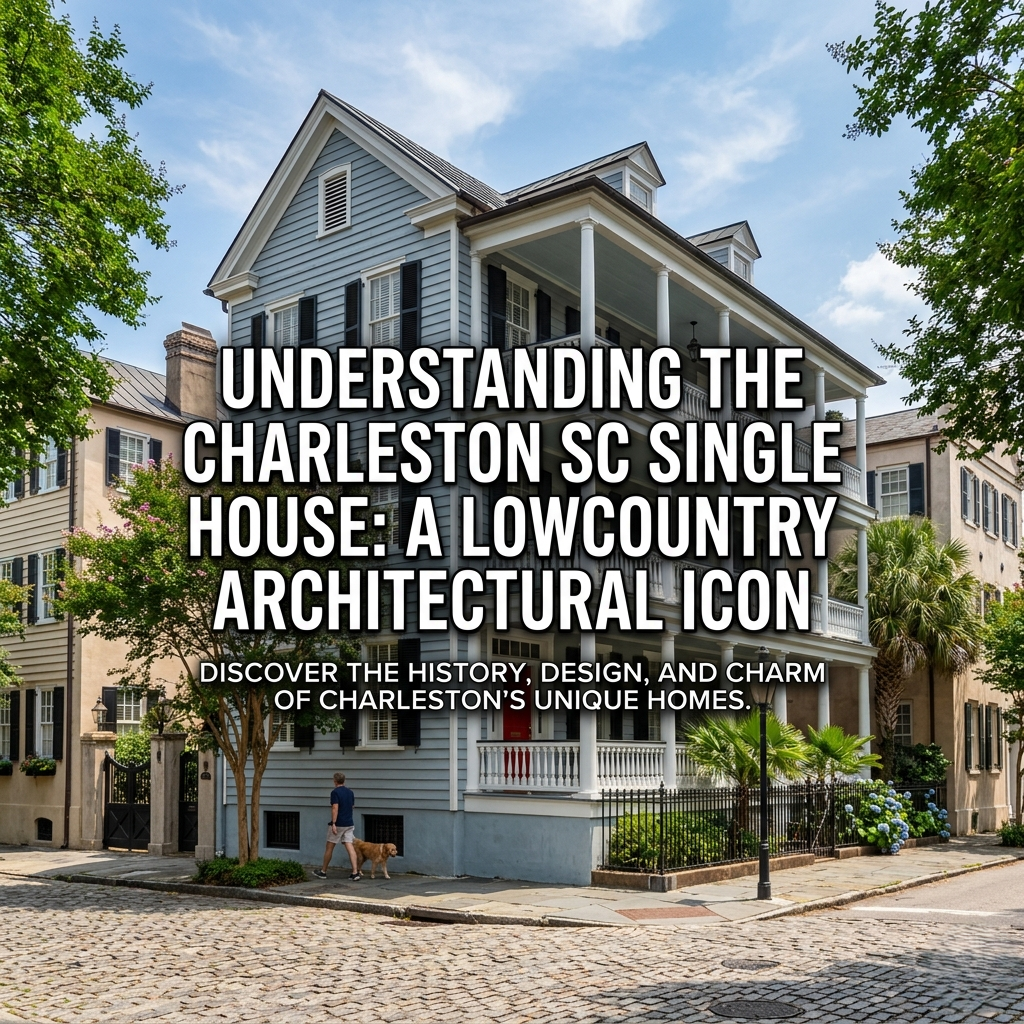
If you have ever wandered the streets of downtown Charleston, you have walked past dozens, maybe hundreds, of Charleston single houses without realizing it. The narrow side, the long porch, and the front door that does not open to the street are all part of one of the most distinctive home designs in American architecture. For anyone exploring historic Charleston as a place to live, invest, or simply admire, understanding the Charleston single is essential. It tells the story of the city in a way no other house style can.
Why Charleston Has a House Style All Its Own
Charleston's geography forced creativity. The peninsula's narrow lots, long and skinny like piano keys, encouraged builders to turn houses sideways. The hot, humid climate demanded shade and airflow. Privacy mattered in a tight urban grid where homes sat shoulder-to-shoulder. Out of those constraints, the Charleston single house emerged in the 1700s and quickly became the dominant residential design throughout the historic district. It is the rare American house style that solved local problems so well, it never had to leave home to become famous.
The Defining Features of a Charleston Single
While there is no single rulebook, most Charleston singles share a recognizable set of traits.
One Room Wide, Two or Three Rooms Deep
The home turns its narrow side toward the street. Inside, rooms stack lengthwise rather than side-by-side. This layout pulls breezes through the home and keeps living spaces shaded by the porch.
The Iconic Side Piazza
The long porch, called a piazza in Charleston, runs the length of the home on its south or west-facing side. It is more than decoration. The piazza shades interior rooms in the afternoon, catches prevailing breezes, and serves as outdoor living space year-round.
The Hidden Front Door
Visitors to Charleston are often confused when they realize the door facing the street opens onto the piazza, not the house itself. This "false" front door creates a private outdoor entry and signals to neighbors whether the family is open to company. If the door is open, you are welcome. If it is closed, the household prefers privacy that day.
High Ceilings and Tall Windows
Ceilings often soar to 10 or 12 feet, and tall windows on the piazza side draw in light and airflow. Many singles were built with windows aligned across rooms to allow cross-ventilation when shutters were opened.
Distinctive Materials and Detailing
Older Charleston singles use brick, hand-hewn timbers, plaster walls, and heart pine floors. Decorative ironwork on gates and balconies, classical columns on the piazza, and shutters that actually work are common touches that give the homes their character.
Where to Find Charleston Singles
The largest concentration sits within the historic district of downtown Charleston, especially in neighborhoods like South of Broad, Harleston Village, Ansonborough, and the French Quarter. As you move outside the original peninsula, you will see the influence of the design carried into newer construction in nearby cities, but the true historic stock remains downtown.
Living in a Charleston Single Today
Modern owners love these homes for the same reasons they have stood for over two centuries. They live larger than they appear from the street. The piazza becomes a true second living room from spring through fall. Cross-breezes still work as designed, especially in homes where original windows and layouts have been preserved. And the historic detailing simply does not exist in newer homes anywhere else.
What Buyers Should Know
Owning a Charleston single also means understanding the realities of historic homeownership. The Board of Architectural Review oversees exterior changes within the historic district, which protects character but also restricts what owners can do. Older systems, including electrical, plumbing, and HVAC, often need updates. Wood-framed windows and shutters need maintenance. Insurance, flood considerations, and termite history all need to be reviewed carefully during due diligence.
The Market Value of a True Charleston Single
Authentic Charleston singles command premium pricing, and the best examples are rarely on the market. Buyers often wait years for the right home in the right block to become available. The combination of architectural significance, historic location, and limited supply means values have held up remarkably well over generations. Even within the category, certain features, such as a dual piazza, original heart pine floors, working shutters, and off-street parking, can dramatically affect price.
Charleston Singles in New Construction
Builders throughout the Charleston region have borrowed the Charleston single concept for newer homes. You will see modern interpretations in Mt Pleasant, Daniel Island, and even in master-planned communities further out. These newer versions often offer the look of a Charleston single with the convenience of modern systems, updated layouts, and lower maintenance demands. They are not the same as owning a true 1830s home in the historic district, but they do let buyers enjoy the spirit of the design without taking on the responsibilities of preserving a historic structure.
Why the Charleston Single Still Matters
This house style is more than a curiosity. It is a working solution to Charleston's climate, geography, and culture. The piazza catches the breeze. The hidden front door creates privacy in a dense neighborhood. The long, slender plan slips into a tight lot without losing usable space. Walking past one, you are looking at the result of generations of practical problem-solving, all wrapped in elegant, instantly recognizable form.
Key Takeaways
The Charleston single is one of the most enduring and distinctive home styles in the United States. Its narrow profile, side piazza, and hidden front door are direct responses to the city's climate and the realities of building on narrow downtown lots. Buyers drawn to these homes can expect a premium price, special considerations for historic preservation, and the chance to own a true piece of American architectural history. Whether you fall in love with an original on a downtown street or a modern interpretation in a newer Charleston-area neighborhood, the design itself has stood the test of time for good reason.