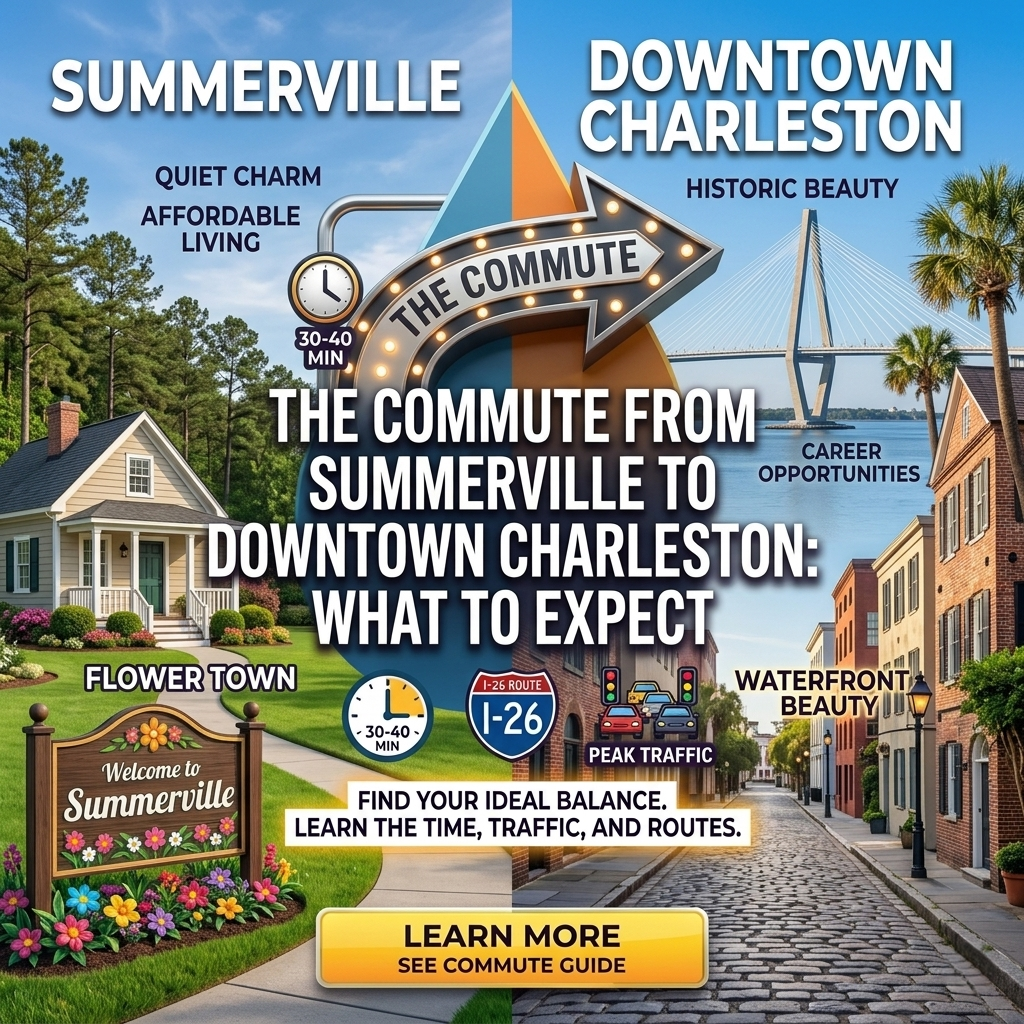
Summerville continues to be one of the most popular landing spots for buyers moving to the Charleston region. New construction, top-rated schools, lower price points, and that charming Flowertown feel all make it a smart choice. But for anyone working in downtown Charleston, one question comes up before almost any other: what is the commute really like? The answer is more nuanced than a single drive-time number, and understanding the realities of getting from Summerville to the peninsula is essential before you put down roots.
The Big Picture: Distance and Drive Time
Downtown Charleston sits about 25 miles southeast of Summerville. In light traffic, that drive can be done in 35 to 40 minutes. During rush hour, however, the same trip can stretch to 55 minutes, an hour, or more depending on weather, accidents, and the time you leave. The distance has not changed, but traffic patterns in the region have intensified significantly with population growth over the past decade.
Your Three Main Routes
I-26 East
Interstate 26 is the primary commuter artery between Summerville and downtown. It is the fastest route under good conditions, but it is also the most congested. Morning bottlenecks tend to develop near the Volvo and Boeing exits, the I-526 interchange, and again near the Septima Clark Parkway as you approach downtown. Evening traffic patterns mirror the morning, with the same chokepoints in reverse.
Highway 17A and Surface Streets
For commuters who prefer to avoid the interstate, Highway 17A and connecting surface streets offer an alternate route. The trade-off is more traffic lights and slower speed limits, but you can sometimes save time during major I-26 backups. Some Summerville residents who live closer to Knightsville or older parts of town find this route more practical, especially when their destination is north of the peninsula.
I-26 with I-526 Connector
Drivers heading to North Charleston, the airport, or West Ashley sometimes use I-526 as a connector instead of taking I-26 all the way into the peninsula. This is not faster for downtown destinations, but it can help spread your drive out across less congested stretches if you are heading to Mt Pleasant or other parts of the area.
Rush Hour Realities
The morning rush in the Charleston region typically builds from about 6:30 to 9:00 a.m. The afternoon rush starts to thicken around 3:30 p.m. and peaks between 4:30 and 6:30 p.m. Weather, accidents, special events downtown, and even Spoleto festivals or holiday weekends can stretch those windows.
Leaving even 15 minutes earlier or later can dramatically change your drive. Many Summerville residents who work downtown shift their hours, working 7-3 or 9-5 instead of 8-4, to avoid the worst of it.
Hybrid and Remote Work Has Changed the Equation
Since 2020, more Summerville residents who work downtown commute fewer days per week. Many do two to three in-office days, which makes the longer drive much easier to tolerate. When you only commute on Tuesdays, Wednesdays, and Thursdays, a 50-minute drive feels very different than it does five days a week. Buyers thinking about Summerville should consider their employer's flexibility, since a hybrid schedule materially changes the value proposition of the area.
Other Commute Considerations
Weather
Heavy rain, fog, and especially flooding can slow downtown drives significantly. Some sections near the peninsula and in low-lying parts of the route are prone to flooding during big rain events.
Bridges and Special Events
Downtown Charleston regularly hosts festivals, runs, and events that close streets or change traffic flow. Race day for the Cooper River Bridge Run, holiday weekends, and Spoleto can all turn a typical drive into a slog.
Parking Downtown
Once you arrive in the historic district or near the medical campuses, parking is its own consideration. Many downtown workers rely on monthly garage permits, employer-provided parking, or designated commuter lots. Factor that into your full commute cost.
Alternatives to Driving Alone
While most Summerville-to-downtown commuters drive solo, there are some alternatives. The CARTA Express Bus offers limited service between Summerville and the peninsula at peak commuting hours. Some employers offer vanpool or carpool programs that reduce both stress and parking expense. For shorter trips between Summerville and parts of North Charleston or the airport, ride-sharing can be a practical occasional option.
 How Where You Live in Summerville Affects Your Commute
Summerville is geographically larger than many newcomers expect. Some neighborhoods sit conveniently near I-26 exits, while others can add 10 or 15 minutes of local driving just to reach the highway. Communities like Nexton and Cane Bay benefit from quick access to the interstate from their immediate exits, while older sections of historic Summerville may rely on slower surface streets to get on the highway. Buyers should factor in not just total miles but actual time to the interstate when comparing neighborhoods.
Strategy for Buyers
If you are planning a Summerville-to-downtown commute, do a test drive at the actual time you would commute on a typical weekday. Drive in both directions and pay attention to where you slow down. Tour homes in different sections of Summerville so you understand how location within the city affects your real-world drive. Finally, talk with your employer about flexible or hybrid scheduling before committing to a longer commute. A few small changes can turn a daunting drive into a very livable one.
Key Takeaways
The Summerville-to-downtown Charleston commute is very manageable for many residents, but it depends heavily on where you live in Summerville, what time you drive, and how often you need to be in the office. Most full-week commuters should expect somewhere between 40 and 60 minutes each way during peak hours. Hybrid and remote work has dramatically softened the experience for many, and small adjustments to commute timing or route choice can make a big difference. With realistic expectations and the right neighborhood, Summerville continues to offer one of the best values in the entire Charleston region for buyers who want space, amenities, and affordability without giving up access to in-town life.