If you want to understand why Summerville keeps growing, follow the paychecks. Big employers in the region pull in workers, and those workers need places to live. Boeing in North Charleston and Volvo Cars in Ridgeville are two of the names I hear most from buyers who are relocating. If that's you, start with Summerville real estate and read on.
I've been selling coastal Carolina real estate for more than 20 years. I can't hand you a made-up number on how much any one plant moves prices. What I can tell you is what I see when these employers hire and the buyers show up.
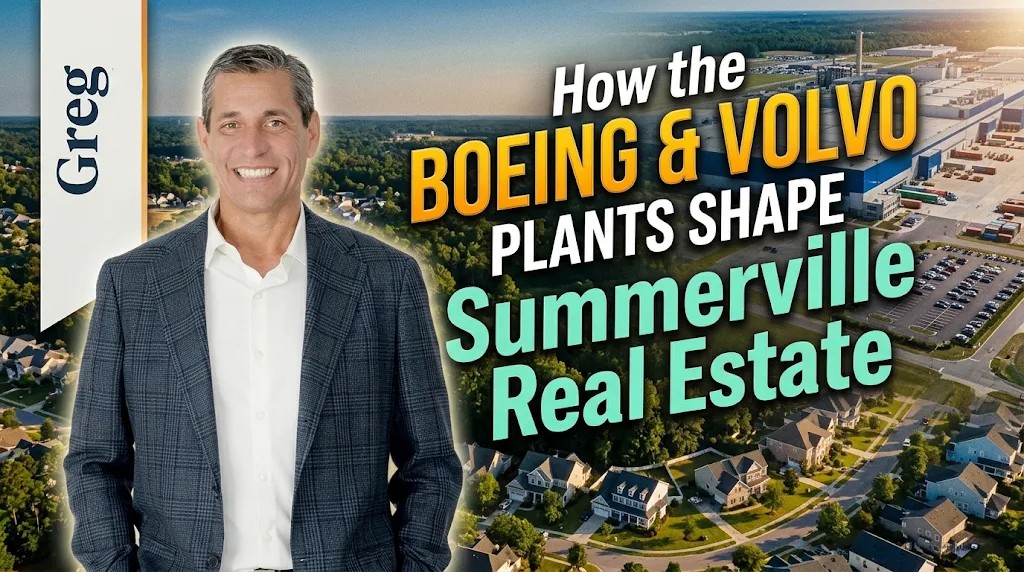
Why Summerville Is Different
Summerville sits inland from the coast, off I-26, with a historic downtown and big master-planned neighborhoods around it. You get more house for the money than you'd find on the peninsula or in Mount Pleasant. You also get a drive to both the Boeing campus and the Volvo plant that most workers can live with.
Here's what I mean. A buyer who works shifts in North Charleston doesn't want a long beach commute. They want a yard, a good school zone, and a price that works. Summerville checks those boxes.
The Boeing and Volvo Effect
Boeing South Carolina
Boeing assembles the 787 Dreamliner in North Charleston. That means engineers, machinists, supply chain staff, and managers. Many of them relocate from other states and look first at the northern part of the Lowcountry, where new construction is easy to find.
Volvo Cars in Ridgeville
Volvo's manufacturing plant sits near Ridgeville, a short drive from Summerville. Plants like this bring direct jobs and a ring of suppliers around them. Buyers tied to that ecosystem often ask about Summerville because it puts them between the plant and the rest of the region.
Other Employers in the Mix
The Lowcountry's employment base doesn't stop at two names. The Port of Charleston, healthcare, and the tech sector all feed demand across the tri-county area. Summerville benefits because it's a practical center point for many of those commutes.
Where Relocating Workers Look
Newer communities are the first stop for many buyers, because they offer modern floor plans, amenities, and builder incentives. Here are a few places I point people toward.
- - Cane Bay Plantation, a large master-planned community with pools, trails, and a wide range of price points.
- - Carnes Crossroads, a newer community with a town-center feel and a mix of home types.
- - Legend Oaks Plantation, an established golf community with mature trees.
Costs, Risks, and Practical Considerations
Job-driven demand has an upside and a risk. Growth brings amenities and new neighborhoods. It also brings traffic on Highway 17A, Highway 78, and I-26, and it can bring higher assessments over time.
Look at property taxes by county, since Summerville spans Dorchester, Berkeley, and Charleston counties. Ask about HOA and special district fees too. Those fees can change your monthly cost more than a small rate difference will.
Strategy for Buyers
Do the commute test. Drive from the neighborhood to your workplace at the time you'd actually leave. Do it on a Tuesday and again on a Friday. Then compare two or three communities side by side.
If you're buying new construction, ask the builder what's included, what incentives apply, and when your closing date is realistic. Hire your own agent before you walk into a model home.
Key Takeaways
- - Boeing in North Charleston and Volvo near Ridgeville shape buyer demand across the Summerville area.
- - Summerville offers more space for the money than coastal and peninsula neighborhoods.
- - Master-planned communities like Cane Bay and Carnes Crossroads attract relocating workers.
- - Traffic on the main commuter routes is part of the tradeoff.
- - Summerville spans three counties, so check property taxes and fees address by address.
- - Test your actual commute before you pick a neighborhood.
- - Bring your own agent when you buy new construction.