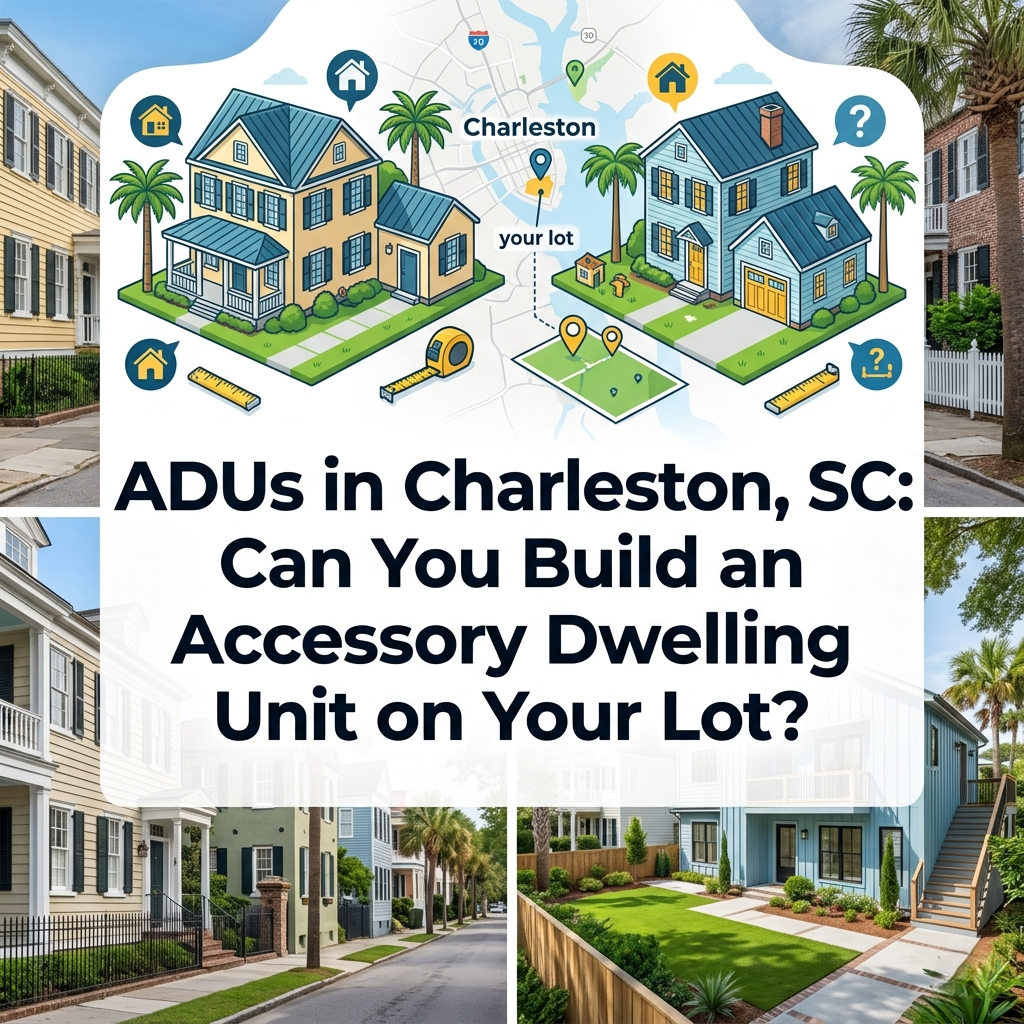
Accessory Dwelling Units, commonly called ADUs, have become a hot topic for Charleston-area homeowners. Whether you call them mother-in-law suites, granny flats, garage apartments, or carriage houses, the basic idea is the same. ADUs are smaller, self-contained living spaces built on the same lot as a primary home. With multigenerational living, remote work, and the search for additional income all on the rise, more owners of Charleston, SC real estate are asking whether they can add an ADU to their property. The answer depends on where you live, what your lot will support, and how the local rules treat ADUs.
Why ADUs Are Trending in the Lowcountry
Charleston families are using ADUs for everything from housing aging parents to creating private guest quarters, home offices, and long-term rental income. The flexibility is the main appeal. A well-designed ADU can adapt to multiple seasons of life and add lasting value to a property. The catch is that ADUs are not allowed everywhere, and even when allowed, they often come with strict rules.
The Rules Vary Significantly Across the Region
The Charleston region is a patchwork of jurisdictions, and ADU regulations vary widely. The City of Charleston, the Town of Mount Pleasant, North Charleston, Summerville, Goose Creek, Berkeley County, Charleston County, Dorchester County, and individual beach towns all set their own rules. HOAs and condo regimes add another layer on top of that. Before you assume anything, identify exactly which jurisdiction governs your property.
The City of Charleston
The City of Charleston allows ADUs in many residential zones, but rules are detailed. Owner-occupancy of either the primary residence or the ADU is often required, size limits apply, and short-term rental of the ADU may be restricted depending on zoning. Within the historic district, additional design-review oversight applies. Homes in the historic peninsula, including parts of historic Charleston and South of Broad, should expect a more involved approval process than newer suburban areas.
Mount Pleasant
The Town of Mount Pleasant has its own approach to ADUs. Allowed uses, setbacks, and unit sizes are spelled out in town ordinances. Some residential zones support ADUs as accessory uses while others do not. If you live in a master-planned community like Park West, Hamlin Plantation, or Belle Hall Plantation, your HOA may further restrict or completely prohibit ADUs even when the town's zoning would otherwise allow it.
Summerville and Surrounding Counties
Summerville and surrounding Berkeley and Dorchester County areas have their own rules. Some master-planned communities allow casitas, in-law suites, or detached guest quarters as part of the original home design but restrict any later additions or true ADUs. Always confirm with both the local government and the HOA before assuming anything is allowed.
Beach Towns
Beach communities like Folly Beach, Isle of Palms, and Sullivan's Island all have specific rules for ADUs, often heavily intertwined with short-term rental regulations. Adding a separate dwelling unit to a beach property can have major implications for permits, rentals, and resale.
What ADUs Typically Look Like in the Charleston Area
Detached ADUs
A small standalone structure, often above or beside a garage, with a kitchen, bathroom, and living space. Carriage-house-style ADUs are common in historic Charleston and can be especially charming when designed to match the main home.
Attached ADUs
A separate, self-contained living unit connected to the primary home but with its own entrance, kitchen, and bath. Often used for mother-in-law suites or rental units in suburban homes.
Garage or Basement Conversions
Converting existing space within or under the home into a separate ADU can be cost-effective and avoids building a brand-new structure. Local code compliance for ceiling height, egress windows, and separate utilities can still be involved.
Common Limits to Be Aware Of
Size Caps
Most jurisdictions cap ADU size, often expressed as a percentage of the primary home's living area or a maximum square footage. Going beyond the cap usually triggers a different zoning category that may not be allowed at all.
Owner Occupancy
Many cities and towns require the owner to live in either the primary home or the ADU. This rule is designed to prevent investors from converting single-family lots into multi-unit rental properties.
Setbacks and Lot Coverage
Setbacks from property lines, building height limits, and total lot coverage rules can all limit where and how big an ADU can be. Older neighborhoods often have tighter setbacks than newer suburban communities.
Short-Term Rental Restrictions
Even if you can build an ADU, you may not be allowed to rent it nightly. Most Charleston-area jurisdictions limit or prohibit short-term rental of ADUs in residential zones. Always confirm before counting on that income.
HOA and Regime Rules
HOAs frequently restrict or prohibit ADUs even when local government rules allow them. Read your covenants and any architectural review board guidelines carefully before designing anything.
Cost and Financing Considerations
ADU construction costs vary widely depending on size, finish level, foundation type, and whether you are converting existing space or building new. Many Charleston-area owners use construction loans, cash-out refinances, or HELOCs to fund ADU projects. Adding an ADU often increases the home's appraised value, but the increase may not always match the construction cost dollar-for-dollar, especially in neighborhoods where ADUs are uncommon.
How ADUs Affect Property Taxes and Insurance
Adding an ADU usually triggers a reassessment, which can raise property taxes. In South Carolina, if your primary home qualifies for the 4 percent owner-occupied assessment, the ADU portion may be treated differently depending on use. Homeowner's insurance will need to be updated as well, and renting the ADU may require a different policy structure. Talk with a local CPA and insurance agent during planning, not after the unit is built.
Resale Impact
A well-designed, fully permitted ADU can be a major selling point. Multigenerational buyers, families wanting work-from-home space, and buyers planning future rental income all see value in a quality ADU. Unpermitted ADUs, on the other hand, can be a serious liability that complicates appraisals, financing, and insurance. Always permit your project correctly.
Strategy for Owners Considering an ADU
Start with research, not design. Confirm what your jurisdiction and HOA allow. Talk with the city or county zoning office, and request copies of your HOA covenants and architectural review board guidelines. From there, consult with a local architect, contractor, and Realtor who has ADU experience in your specific area. The right team will help you balance build cost, function, resale value, and the rules unique to your property.
Key Takeaways
- - ADUs can add real value, flexibility, and income potential to a Charleston-area home, but the rules vary significantly by jurisdiction.
- - The City of Charleston, Mount Pleasant, Summerville, Berkeley County, Dorchester County, and beach towns each have their own ADU regulations.
- - HOAs and condo regimes can override otherwise favorable government rules.
- - Size caps, owner-occupancy requirements, setbacks, and short-term rental restrictions are common limits.
- - Properly permitted ADUs can boost resale. Unpermitted ADUs create financial and legal risk.
Frequently Asked Questions
Can I build an ADU on any residential lot in Charleston?
No. ADUs are only allowed in specific zoning districts and only on lots that meet size, setback, and lot-coverage requirements. Check directly with your local government and HOA before assuming anything is allowed.
Can I rent my ADU short-term in Charleston?
Often no. Most Charleston-area jurisdictions limit or prohibit short-term rental of ADUs in residential zones. Even in beach towns with established short-term rental markets, ADU rentals may have specific restrictions.
Will adding an ADU increase my property taxes?
Yes, almost always. Adding an ADU usually triggers a reassessment that increases the property's taxable value. Depending on use, parts of the property may also be assessed differently from the primary residence.
Do ADUs add resale value to my home?
A well-designed, fully permitted ADU can increase resale value, especially in markets where multigenerational living or in-law suites are in demand. However, the value boost may not equal the construction cost in all areas, so plan accordingly.
What is the first step if I want to add an ADU to my Charleston home?
Start with your local zoning office and HOA documents. Confirm what is allowed before consulting an architect or contractor. From there, build a team that has ADU experience in your specific jurisdiction.
Greg Harrelson is a seasoned Realtor® with more than 30 years of experience serving the Carolina markets. As the founder of Century 21 The Harrelson Group, Greg has built his career helping buyers, sellers, and investors achieve success in every corner of the coastal Carolina real estate market. His expertise spans residential homes, investment properties, land development, and coastal condos. Known for his deep local knowledge, innovative marketing strategies, and commitment to personal service, Greg consistently helps clients reach their real estate goals while navigating the ever-changing market with confidence and precision.