Solar panel questions come up in almost every listing appointment I take these days. Sellers want to know if the system on their roof helps or hurts the sale. Buyers want to know if that panel array is a savings machine or a legal headache. Here's the honest answer after 20+ years watching Charleston homes trade hands and sitting in on more solar transactions than I can count.
It depends on one thing above all else. Do you own the panels outright, or are they leased?
Owned Solar vs. Leased Solar
If you paid cash for your solar system or financed it and paid it off, you own it. When you sell the house, the system stays with the property and becomes a feature the buyer inherits. That's the scenario where solar adds value.
Leased solar is different. A third-party company owns the panels on your roof. You have a long-term contract, usually 20 to 25 years, and you pay a monthly bill for the power they generate. When you sell, that contract has to transfer to the new buyer, or you have to buy the system out of the lease, or you have to remove the panels. All three of those add friction to a sale.
Here's the thing. Buyers walking into a Charleston home tour love the idea of solar. They lose interest fast when they find out they'd be signing on to a 15-year remaining lease with a company they've never heard of.
What Buyers Actually Ask
When my clients tour a home with solar panels, the same questions come up every time.
How old is the system? What's the warranty situation? Is there a monthly bill going with this house or did the sellers pay it off? What did the electric bills look like last summer? Are the panels tied to the roof warranty and if so, whose warranty am I inheriting?
Sellers who can answer those questions clearly, in writing, close smoother sales. Sellers who fumble the answers watch buyers walk.
Does Solar Actually Add Value?
National appraisal data suggests owned solar systems generally do add value at resale, particularly in warmer climates where the electricity savings are real. Charleston qualifies. Long cooling season, high electric bills in summer, and increasingly buyer-savvy on energy costs.
But value depends on a few specific things.
The System's Age and Condition
A five-year-old system with warranty coverage adds meaningfully more value than a fifteen-year-old system approaching end-of-life.
The Actual Power Production
If you can show buyers real monthly production numbers and matching utility bills that dropped dramatically, that's a real selling point.
Roof Condition Under the Panels
If your roof needed replacement two years ago and you put panels on top of the aging shingles, buyers see a problem. If your roof was recent when panels went up, buyers see an integrated system with decades of life left.
Local Comps
Homes in Mt Pleasant, Daniel Island, and newer master-planned communities in Summerville tend to see stronger buyer response to solar than older homes in more traditional neighborhoods. Not always, but generally.
South Carolina-Specific Considerations
Net Metering Rules Keep Changing
Net metering is what lets you send excess power back to the grid and get credited on your bill. South Carolina's net metering programs have been in a state of flux, and current rules matter to what a system actually saves you. Check with Dominion Energy or Berkeley Electric Cooperative (depending on your service area) for the current terms before you buy or sell.
Hurricane and Storm Considerations
Coastal solar systems need to be rated for high winds. Look for systems installed with proper mounting hardware and a licensed local installer who understands the code here. Insurance carriers are increasingly asking specific questions about solar during renewals and new policies.
The Federal Tax Credit
Federal solar tax credits have driven a lot of Charleston-area installations. Buyers can't claim credits for systems already installed, but the tax credits already realized by the seller lowered the effective cost of the system that's transferring to them.
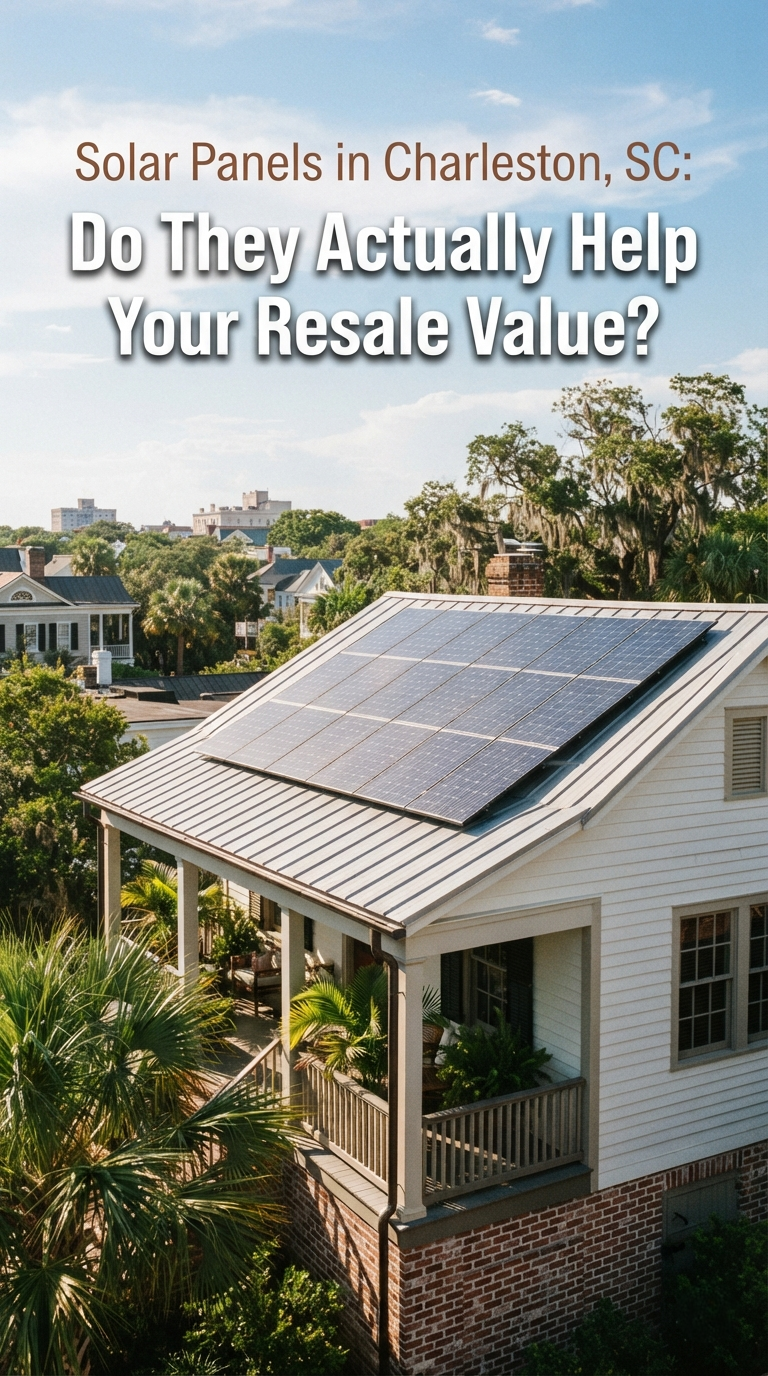 What Sellers Should Do Before Listing With Solar
Gather Documentation
Original purchase paperwork or lease contract. Warranty documents. Recent utility bills showing the savings. Any roof warranty impact statements. Get all of it in one folder before you list.
Understand Your Lease Options
If your panels are leased, call the lease company now. Learn exactly how transfer works, what the buy-out amount is today, and how long transfer takes. Buyers won't wait.
Price the Home Realistically
An owned system in good condition can support a stronger price. A leased system usually shouldn't add to your asking price, and in some cases means pricing slightly under a comparable non-solar home to stay competitive.
What Buyers Should Do When Touring Solar Homes
Ask the listing agent whether the panels are owned or leased before you make an offer. Get the documentation during due diligence. Have an electrician or your home inspector look at the system as part of your inspection. And confirm with your insurance agent that solar coverage fits into the policy you're pricing for the home.
Where I See Solar Working Best in the Charleston Market
Larger single-family homes in Park West, Hamlin Plantation, and similar communities. Modern homes in Cane Bay Plantation where the buyer profile skews toward efficiency-minded families. Custom homes on larger lots where the visual footprint of panels doesn't compete with a historic aesthetic.
Where I see it working less well? Historic downtown properties where design review complicates panel installation and where the buyer profile isn't primarily looking for energy savings.
Key Takeaways
- - Owned solar systems generally add resale value in Charleston. Leased systems complicate sales.
- - Buyers ask specific questions about age, warranty, production, and roof condition. Sellers should have documentation ready.
- - South Carolina's net metering rules keep evolving. Confirm current terms with your utility before buying or selling a solar home.
- - Coastal installations need hurricane-rated mounting and installers who understand local code.
- - Owned solar works best in modern homes and master-planned communities. It's a tougher fit in historic districts.
Frequently Asked Questions
Do solar panels add value to a Charleston home?
Owned solar systems typically add value in the Charleston market, especially on newer homes where buyers see the energy savings as a real benefit. Leased systems usually don't add value and can complicate sales if the transfer process is unclear.
Can I sell a home with a leased solar system?
Yes, but the lease has to transfer to the buyer, or the seller has to buy out the lease before closing, or the panels have to be removed. Start that conversation with the lease company early, well before you list.
Do solar panels affect insurance in coastal South Carolina?
They can. Some insurance carriers ask specific questions about solar during renewals and new policies, especially in coastal areas. Confirm with your agent that your policy covers the system and that any wind exposure is properly rated.
Are solar panels legal in Charleston's historic district?
Design review applies in the historic district and may restrict panel placement, especially on street-facing roof slopes. Talk with the Board of Architectural Review before assuming solar is feasible on a historic property.
What size solar system makes sense for a Charleston home?
Size depends on your electric usage, roof orientation, shading, and current net metering terms. A licensed local installer can run the numbers for your specific home. Don't oversize based on a national estimate.
About Greg Harrelson
Greg Harrelson is Broker/Owner of Century 21 The Harrelson Group and owner of Century 21 Expert Advisor in the Charleston market. With more than 20 years selling coastal Carolina real estate, 15,000+ homes and condos sold or partnered on, and 500+ Google reviews from clients across the region, Greg leads roughly 500 agents across the Grand Strand and Charleston. He helps buyers, sellers, and investors win in every corner of the coastal Carolina market.