If you own a home in the Charleston area, your HVAC is the hardest-working system you've got. Summer here isn't like summer up north or out west. It's a five-month grind of heat and humidity that punishes systems that aren't maintained. I've watched clients hand off homes to buyers who then face a $10,000 HVAC replacement three months later because nobody prepped the system properly. Don't let that be you.
Here's what I mean. In over 20 years selling coastal Carolina real estate, HVAC is one of the top three things I see cost homeowners the most money when it's neglected. And the fix is usually simple, cheap, and takes an afternoon.
Why Charleston HVAC Systems Wear Out Faster
Three things make coastal HVAC different. First, the humidity. Your system isn't just cooling air — it's constantly dehumidifying, which stresses the compressor and coils. Second, salt air near the coast corrodes exterior components faster than inland climates. Third, the season is long. Systems that would get a break in October up north are still running full tilt through most of the year here.
Add those together and Charleston HVAC lifespans often run shorter than manufacturer averages. A system that would last 20 years in Ohio might make it 12 to 15 here.
What to Do Before Summer Actually Hits
Book a Professional Tune-Up in Early Spring
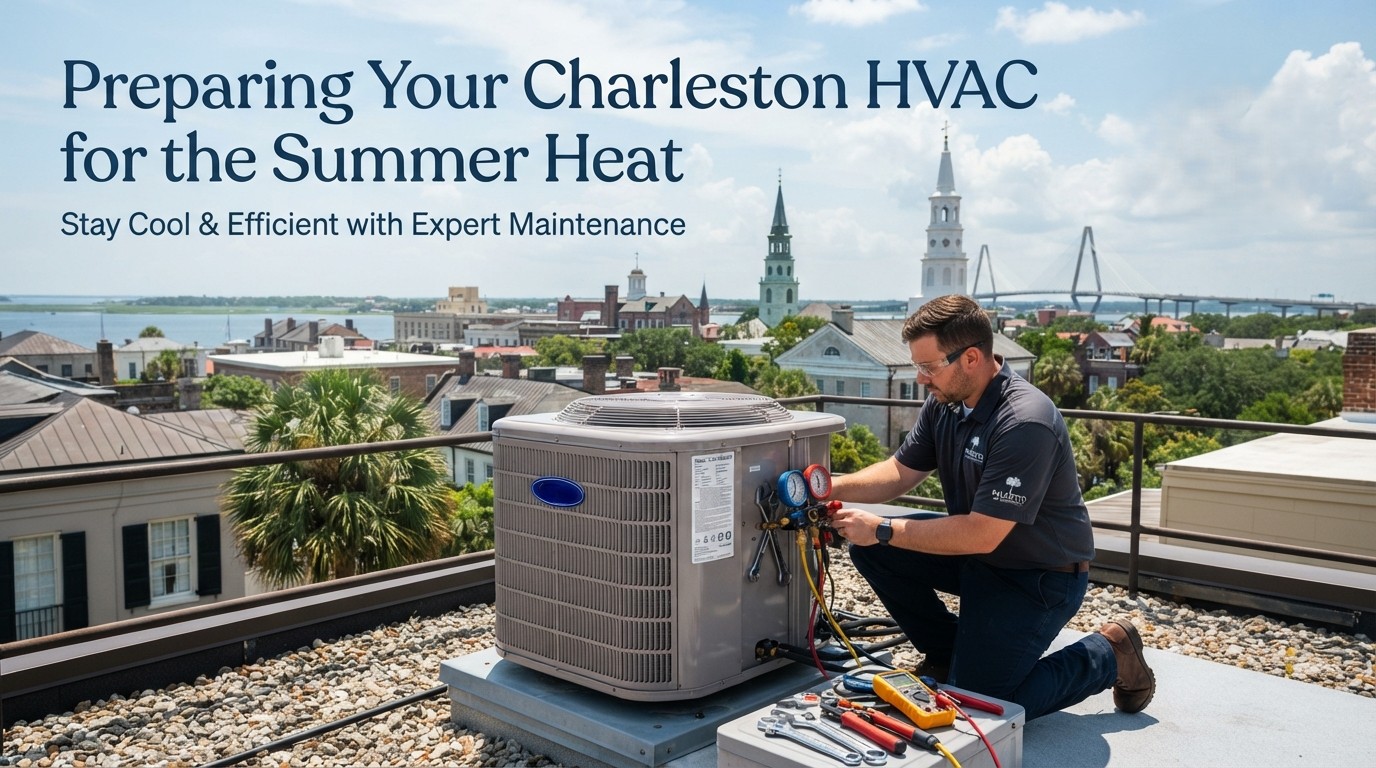
Every March or April, call a licensed local HVAC company. Not the cheapest one. A good annual service should include cleaning the outdoor condenser coil, checking refrigerant levels, inspecting electrical connections, testing the capacitor, checking the blower and motor, and clearing the condensate drain line.
Skip this step and you're gambling with a July breakdown that costs multiples of what the tune-up would have.
Change Your Filter Before It Looks Dirty
The single easiest and most-neglected task. Change your HVAC filter every 30 to 60 days during heavy use months. A clogged filter forces the system to work harder, drives up your power bill, reduces dehumidification, and shortens the lifespan of every component downstream.
Set a phone reminder. Buy filters in bulk. This is the cheapest insurance you can buy on a $10,000 system.
Clear the Outdoor Unit
Walk around your outdoor condenser. Any shrubs, vines, or debris within two feet needs to go. Rinse the coils gently with a garden hose from the top down. A dirty coil dramatically reduces cooling efficiency, especially in Charleston's heat.
Check the Condensate Drain Line
Your HVAC pulls a lot of moisture out of the air. That moisture drains through a small PVC line, usually running out the side of the house or to a floor drain. Clogged drain lines cause overflow, water damage, and sometimes system shutdown. A cup of white vinegar poured into the drain access every few months keeps things flowing.
Test the Thermostat
Run through a cycle. Confirm the temperature reads accurately, the system kicks on when it should, and the target temperature is actually being maintained. If you've got an older programmable thermostat, consider upgrading to a smart thermostat. The efficiency gains typically pay for the upgrade within a couple of summers.
Attic and Ductwork Considerations
Your ductwork carries every bit of cool air from the unit to your rooms. Leaks, poor insulation, or crushed ducts in the attic waste tremendous amounts of energy. Have a professional inspect your ducts every few years, especially in older homes in neighborhoods like Byrnes Down, James Island, or older sections of Mt Pleasant.
Attic insulation matters too. Underinsulated attics let the sun bake your ductwork, forcing your system to work harder. Bringing attic insulation up to modern R-values often delivers better ROI than any single HVAC upgrade.
Crawl Space Impact
For homes with crawl spaces, moisture down there affects everything above it. Ductwork running through a damp crawl space collects moisture, breeds mold, and works inefficiently. If your crawl space isn't encapsulated with a vapor barrier and proper ventilation or dehumidification, address that before you address the HVAC itself. It's often the root cause of HVAC problems in older Lowcountry homes.
Signs Your System Needs More Than a Tune-Up
It's Running Constantly But Not Cooling
Low refrigerant, dirty coils, or a struggling compressor. Call a technician same-day.
You Hear Strange Noises
Grinding, screeching, or clicking sounds usually mean mechanical trouble. Turn the system off and call for service.
Your Bill Is Way Up
A sudden electric bill spike often points to an HVAC efficiency problem. Compare to last summer and last month.
Your Humidity Is Uncomfortable Even When It's Cool
The system is cooling but not dehumidifying properly. Common in oversized systems that cycle off too fast. May need a professional load calculation or a whole-house dehumidifier.
The System Is 12+ Years Old
You're in end-of-life territory. Start planning for replacement rather than getting caught in a mid-July emergency.
What to Budget For
Annual professional tune-up: modest cost, high value. Filter changes: a few dollars each. Full system replacement: several thousand to over $10,000 depending on size, brand, and efficiency rating. Building the replacement into a home ownership budget makes the eventual bill less painful.
For Sellers Getting Ready to List
An HVAC that's been serviced regularly and has documentation is a selling point. Buyers ask about system age and condition constantly. Have your latest service invoice ready. If your system is aging, address it before listing or price accordingly. Nothing kills a Charleston sale like a failed inspection HVAC section.
For Newer Communities
Homes in newer master-planned communities like Nexton, Cane Bay Plantation, and Park West typically start with modern, properly sized systems. Even so, the same maintenance habits apply. Coastal humidity doesn't care whether your system is two years old or twenty.
Key Takeaways
- - Charleston HVAC systems wear out faster than inland systems due to humidity, salt air, and long cooling seasons
- - Schedule professional tune-ups every spring before summer heat hits
- - Change filters every 30 to 60 days during heavy use
- - Keep the outdoor condenser clear and rinse coils regularly
- - Address crawl space moisture issues that stress ductwork and equipment
- - Systems past 12 years should be replaced proactively, not reactively