Buying new construction in the Charleston area comes with something resale homes don't offer — a real warranty. Multiple warranties, actually. Structural. Systems. Workmanship. Manufacturer coverage on appliances and materials. Buyers see the shiny model home and assume the warranty is bulletproof. It's not. It's specific, limited, and full of details most buyers never read until something breaks.
Here's what nobody tells you. In 20+ years of coastal Carolina real estate, I've watched buyers fall in love with new construction warranties they didn't actually understand. The warranty helps. It also has real limits. Whether you're eyeing Charleston new construction homes for sale in a master-planned community or a smaller infill build, here's what to know before you sign.
The Three Layers of a Typical Builder Warranty
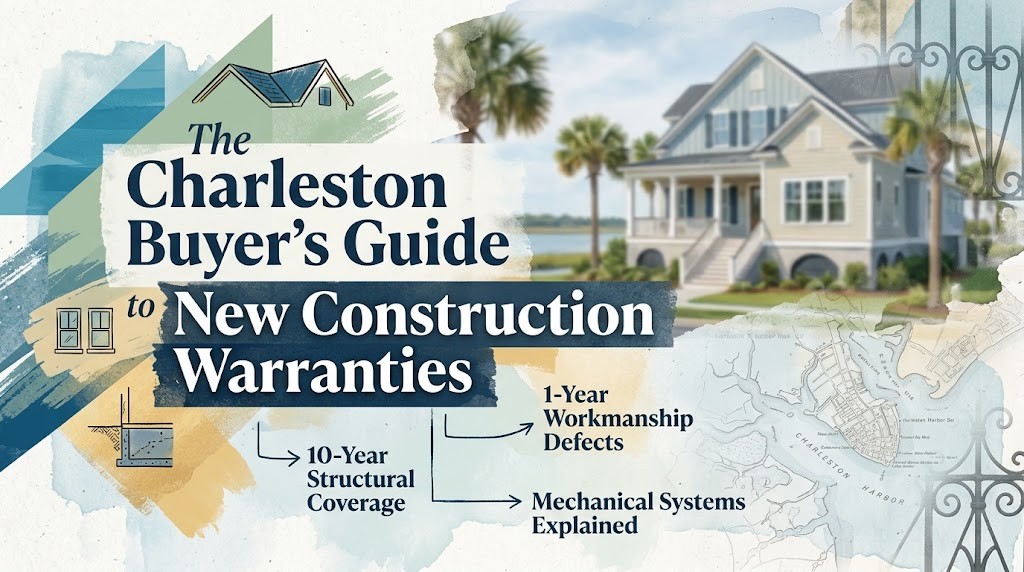
Workmanship Warranty (Usually 1 Year)
Covers defects in workmanship and materials. Cabinet doors that don't align. Trim gaps. Small drywall issues. Anything that shows up during the first year of living in the home. This is the shortest but most-used warranty. Most builders send a service representative for a 30-day, 6-month, and 11-month walk-through to catch issues within the window.
Systems Warranty (Usually 2 Years)
Covers major systems — HVAC, plumbing rough-in, electrical wiring. Systems that develop defects in year one or two typically fall under this coverage.
Structural Warranty (Usually 10 Years)
Covers major structural components like foundation, load-bearing walls, roof framing, and floor systems. Insured through a third-party warranty company in many cases. The long term looks reassuring, but the covered defects are narrower than most buyers assume.
What Manufacturer Warranties Cover Separately
Appliances, HVAC equipment, water heaters, roofing materials, and windows carry their own manufacturer warranties independent of the builder's coverage. These vary widely by manufacturer and model. Ask for the complete warranty package at closing so you know what's covered by whom.
What Warranties Don't Cover (The Fine Print)
Normal Wear and Tear
Paint chips. Grout shrinkage. Minor settling cracks. Weather-related staining. These are almost always excluded.
Consumer-Grade Materials Over Their Manufacturer Lifespan
A hot water heater that fails at year 8 falls under manufacturer coverage (or not) — not the builder's warranty.
Damage From Buyer Modifications
Add a fence, install a security system, put in a pool, and any damage caused by those changes voids that portion of the warranty. Read the terms before modifying anything major.
Landscaping and Lot Grading
Grass dying, plants failing, drainage issues from yard changes — usually excluded or heavily limited.
Storm or Natural Disaster Damage
Hurricane damage, flooding, wind — insurance coverage, not warranty coverage.
Consequential Damage
If a plumbing defect causes water damage to your floors, the builder may cover the plumbing repair but not necessarily the flooring damage. Fine print varies wildly.
How to Actually Use the Warranty
Do the Walk-Throughs
Take the 30-day, 6-month, and 11-month walk-throughs seriously. Make a list of every issue as it appears. Submit them in writing. Timing matters — issues you flag at month 10 stay under warranty. Issues you notice at month 13 don't.
Document Everything
Photos of every issue. Dates. Written communication with the builder's warranty team. If disputes arise, documentation determines outcomes.
Push for Written Responses
Verbal promises from a warranty rep don't count. Get repairs, denials, and any commitments in writing.
Know Your Escalation Path
Every major builder has a service department, a customer care manager, a regional office, and a corporate office. When lower-level responses are inadequate, escalate professionally and persistently.
Warranties by Builder Type
National Production Builders
Companies building at scale in communities like Summers Corner and other master-planned Summerville communities offer standardized warranty programs. Predictable, consistent, but sometimes bureaucratic to navigate.
Regional Semi-Custom Builders
Charleston-area regional builders often offer stronger warranty programs and more personal customer service. Fewer standardized processes but sometimes better outcomes when issues arise.
Custom and Small Local Builders
Custom builders vary dramatically. Some offer excellent warranty support. Others treat warranty as an afterthought. Reference-check aggressively before signing with a smaller builder.
Neighborhood-Specific Considerations
Master-Planned Suburban Communities
New construction dominates communities like Charleston National Country Club and much of the Berkeley County corridor. National builder warranties dominate here. Expect standardized processes.
Infill New Construction in Established Neighborhoods
Custom and semi-custom builders often handle new construction in older neighborhoods like Park Circle. Warranty programs vary meaningfully by builder.
Coastal and Beach Communities
New construction on the beach islands is often heavily custom. Warranties typically address the coastal-specific systems and materials but need careful review — normal warranty exclusions can leave gaps in salt-air-heavy environments.
Ask These Questions Before Signing
- - Who is the third-party warranty insurance carrier for the structural warranty?
- - What are the specific coverage periods for workmanship, systems, and structural?
- - Does the warranty transfer if I sell the home before it expires?
- - Who handles warranty service — the builder directly or a subcontracted service company?
- - What is the process for submitting warranty claims?
- - What is not covered that I should know about?
- - Can I get sample warranty documents to review before I commit?
What Happens When You Sell the Home
Structural warranties often transfer to subsequent owners for the balance of the coverage period. Workmanship and systems warranties usually don't. If you're selling a new construction home mid-warranty, disclose specifically what transfers and what doesn't. Buyers value transferable coverage.
Should Warranty Coverage Drive Your Buying Decision?
Warranty coverage is a real benefit but shouldn't be the only reason to buy new construction. Resale homes with strong bones, established landscaping, character, and proven history can be better long-term investments in the right neighborhoods. Weigh warranty coverage as one factor among many — location, price, layout, resale potential — not the deciding factor.
Key Takeaways
- - New construction warranties typically layer workmanship (1 year), systems (2 years), and structural (10 years) coverage
- - Manufacturer warranties on appliances, HVAC, and materials operate separately
- - Warranties don't cover normal wear, buyer modifications, storm damage, or often consequential damage
- - Complete 30-day, 6-month, and 11-month walk-throughs and submit issues in writing during the coverage window
- - National, regional, and custom builders offer different warranty experiences — reference-check accordingly
- - Ask specific questions about coverage, service process, and transferability before signing