Few architectural details are more quintessentially Lowcountry than the Charleston porch. Whether you call it a piazza, a screened porch, or simply a "front porch," this outdoor living space has been a defining feature of Charleston homes for generations. And in today's market, adding or upgrading a porch is one of the smartest investments many homeowners can make. For sellers preparing their home for market and homeowners wanting to enhance their daily lifestyle, understanding the design choices, costs, and ROI of a Charleston porch is essential. If you are exploring Charleston, SC real estate, this feature can influence both how you live and what your home is worth.
Why the Charleston Porch Matters
The Charleston porch is more than decoration. It is a practical response to the Lowcountry climate. Deep overhangs shade interior rooms, cross-breezes cool the space naturally, and the porch itself becomes a second living room for much of the year. In a market where buyers actively look for outdoor living space, a well-designed porch signals both lifestyle appeal and architectural authenticity. It is the kind of feature that photographs beautifully and shows even better in person.
The Different Types of Charleston Porches
The Traditional Piazza
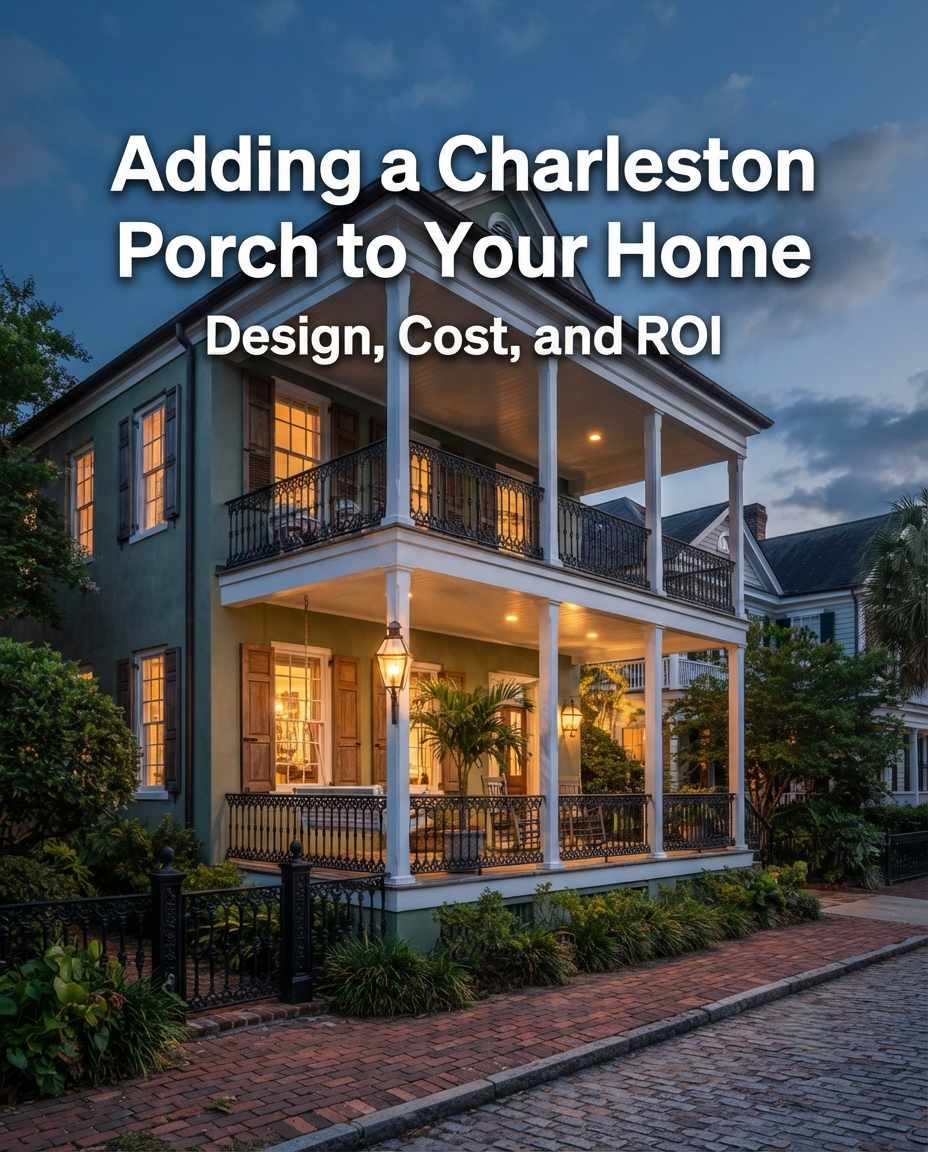
The classic Charleston Single house features a long side piazza that runs the length of the home. Multi-story piazzas with classical columns define much of the historic district and neighborhoods like Old Village in Mount Pleasant. Adding an authentic piazza to an existing home requires careful design, appropriate proportions, and often historic-district or HOA approval.
Screened Porches
Screened porches are the most versatile addition for modern Charleston homes. They extend the usable outdoor season by keeping mosquitoes and other insects at bay, while still delivering the open airflow that defines Lowcountry living. They tend to be the most common ROI-positive porch addition in the region.
Front Porches
A welcoming front porch adds curb appeal and creates a natural gathering space for neighbors. Even a modest front porch dramatically shifts how a home feels from the street.
Back Deck and Screened Combinations
Many modern homes combine a screened porch with an adjacent open deck or patio. The combination gives you the best of both worlds and works beautifully for entertaining.
Design Considerations
Proportion and Ceiling Height
A traditional Charleston porch typically features tall ceilings, often 9 to 10 feet, to enhance airflow and echo historic proportions. Skimping on ceiling height creates a compressed, less inviting space.
Ceiling Finish and Haint Blue
A tongue-and-groove wood ceiling painted in soft "haint blue" is a classic Charleston detail. It nods to Gullah tradition, reflects light beautifully, and adds instant Lowcountry character.
Columns and Trim
Square or classical round columns, ceiling beams, and appropriate trim details connect the porch to the home's architectural style. Getting the details right elevates the entire project.
Screening System
Traditional screen systems, retractable screens, and motorized screen walls all serve different needs. Retractable screens in particular have become popular because they let you convert the space seasonally.
Flooring
Tongue-and-groove painted wood, brick, tile, or composite decking are all appropriate depending on style and budget. Match the floor to the home's overall architecture.
Ceiling Fans and Lighting
Large ceiling fans keep the porch comfortable in summer heat, while thoughtful lighting extends usability into the evening.
Cost Ranges
Costs vary widely depending on size, finish level, and complexity. Simple screened porch additions may start in the mid to high five figures, while larger custom piazzas with high-end finishes can easily reach six figures. Historic district projects and complex designs add cost due to permits, engineering, and craftsmanship requirements. Always get multiple quotes from licensed local contractors and build in contingency for the unexpected.
Return on Investment
Outdoor living space is one of the most consistently strong ROI-generating projects in the Charleston market. A well-designed porch typically returns a significant portion of its cost at resale and often accelerates the sale of a home. Beyond dollar ROI, the lifestyle return is significant, as most homeowners who add porches report using them almost daily.
Sellers Who Benefit Most
Homes in family-friendly neighborhoods like Park West, Cane Bay Plantation, and Carolina Bay often see especially strong buyer response to well-designed porches. Buyers in these markets expect outdoor living space, and a porch can meaningfully differentiate the home.
Historic Homes
For historic homes, restoring or upgrading an existing piazza with period-appropriate materials often adds significant value while preserving character.
Permits and Approvals
Local Permitting
All porch additions require permits through your local municipality. Setback requirements, height limits, and lot coverage rules all apply. Some historic districts add design review on top of standard permits.
HOA Rules
Master-planned communities and HOAs typically have architectural review boards that approve exterior changes. Get approval before starting any work.
Structural Considerations
Existing homes may need structural modifications to support a porch addition. A licensed contractor or structural engineer should evaluate feasibility during the design phase.
Choosing the Right Contractor
Look for local contractors with specific porch and outdoor living experience. Ask to see similar projects they have completed in the Charleston area. Verify licenses, insurance, and references. Get detailed written quotes that include design, materials, permitting, and cleanup. And take time to understand the timeline and any factors that might affect it.
Timing Your Project
The Charleston market rewards well-timed porch additions. Completing the project in late winter through early spring often positions your home beautifully for the spring selling season. Summer completion can also work well but often runs into contractor demand and weather delays.
Beyond the Sale: Everyday Lifestyle
For homeowners staying long-term, the porch is one of the highest lifestyle-return investments available. Morning coffee, evening drinks, family dinners, and weekend afternoons all benefit from the added outdoor living space. Charleston's climate supports porch use for much of the year, and homeowners who add porches almost universally report loving them.
Strategy for Owners Considering a Porch
Start with clarity on your goals. Are you preparing for resale in the next year or two? Or are you investing in your long-term enjoyment of the home? Both goals lead to good outcomes, but they can affect design choices. Work with a Realtor early to understand which porch features add the most value in your specific neighborhood. Then work with a contractor and possibly a designer to plan a porch that fits your home's architecture, respects the neighborhood context, and delivers on both lifestyle and financial goals.
Key Takeaways
Adding a Charleston porch is one of the highest-impact home improvement projects available in the Lowcountry, both for lifestyle and resale value. Whether you go with a traditional piazza, a screened porch, or a modern combination, thoughtful design that respects the home's architecture and Lowcountry character will deliver the strongest results. Budget carefully, permit properly, work with experienced local contractors, and time the project to align with your goals. Done right, a Charleston porch can transform how you live in your home and how buyers see it when it is time to sell.
Frequently Asked Questions
How much does a Charleston screened porch typically cost?
Simple screened porches often start in the mid to high five figures, while larger or higher-end projects can reach six figures. Costs depend on size, finish level, materials, and complexity. Always get multiple quotes from licensed local contractors.
Does a porch increase my home's value in Charleston?
Yes, often significantly. Charleston-area buyers actively look for outdoor living space, and a well-designed porch typically returns a strong portion of its cost at resale while helping the home sell faster.
Do I need a permit to add a porch?
Yes. All porch additions require local permits. Historic districts and HOAs may add design review requirements as well.
What is "haint blue" and should my porch ceiling be that color?
Haint blue is the soft blue color traditionally painted on porch ceilings in the Lowcountry. It ties to Gullah folklore and reflects light beautifully. Painting a porch ceiling haint blue is a classic Charleston detail that many homeowners choose.
How long does a porch project typically take?
Timelines vary based on project scope, permit processing, and contractor availability. Simpler projects may take a few weeks. Larger projects can stretch a few months. Plan for delays and start earlier than you think you need to.
About Greg Harrelson
Greg Harrelson is a seasoned Realtor® with more than 30 years of experience serving the Carolina markets. As the founder of Century 21 The Harrelson Group, Greg has built his career helping buyers, sellers, and investors achieve success in every corner of the coastal Carolina real estate market. His expertise spans residential homes, investment properties, land development, and coastal condos. Known for his deep local knowledge, innovative marketing strategies, and commitment to personal service, Greg consistently helps clients reach their real estate goals while navigating the ever-changing market with confidence and precision.